Sunday, April 26, 2009

Foodbuzz 24, 24, 24: Filipino Food Beyond Lumpia


When it comes to Filipino food, most non-Filipinos can't seem to get past lumpia (egg rolls) and pansit (noodles). I think there are a few reasons why this is the case. First, Filipino food still hasn't really stepped into the mainstream simply because Filipino food is such a fusion and mish mash of influences from other countries that it's hard to pinpoint what Filipino food actually is.

Second, when non-Filipinos do encounter Filipino food, it's either through a potluck or they're invited to a Filipino house party. In a potluck scenario, lumpia and pansit are the usual choices because the flavors would be more appealing to the non-Filipino palate and these dishes also have a recognition factor since both dishes are similar to what is seen in Chinese cooking. When it comes to a house party, lumpia and pansit are definitely present as well as dishes that don't always require a lot of prep time aka a lot of fried dishes.

For me, what I love about Filipino food is that it truly is a global cuisine and it's because of the Southeast Asian, Latin and even American influences that truly give Filipino food its vibrancy. So for my Foodbuzz 24, 24, 24 proposal, I was going to plan a meal that would accomplish two things. One goal would be to introduce a cuisine that's very much under represented to a group of friends who truly haven't experienced Filipino food beyond lumpia and the second goal would be to introduce some dishes to them that would reflect a particular cultural influence. To set up this meal and to also give you some more information, I want to first give you some background about Philippines and how in a sense, our food tells our history as a country.

First, Philippines is a country that has a tropical climate divided into rainy and dry seasons with an archipelago with 7,000 islands. In fact, there are over 80 dialects in the Philippines with Tagalog being main language that allows the lines of communication to flow regardless of what province you hail from. The geography of the isles contains everything from mountains to central plains to coral reefs with seas touching the world’s longest discontinuous coastline along with a multitude of lakes, rivers, springs and brooks. When it comes to the population, there are over 120 different ethnic groups, all of whom live their lives, build houses, tell and write stories and most of all, prepare food in a lush tropical environment.

Chinese trade started in the Philippines in the 11th century, with many Chinese traders who ended up living in the Philippines and taking Filipino wives. This development resulted in Filipinos having Chinese origins, bloodlines and of course, resulted in major Chinese input into Filipino cuisine. This Filipino-Chinese cooking would use ingredients native to the Philippines, have Filipino names, but be cooked using Chinese techniques. Dishes like pansit are simply noodles, lumpia are fried eggs rolls and siopao are like the Chinese steamed filled buns called cha su bao. Most of these dishes were adopted across many different parts of the Philippines, but adapted based on what ingredients were locally available. For example, Pansit Malabon has oysters and squid since Malabon is a fishing city while Pansit Marilao is topped with rice crisps because Marilao is a city within the Luzon rice bowl.

The arrival of the Spaniards brought with them both Spanish and Mexican food influences, since a Viceroy from Mexico City was appointed by Spain to govern the Philippines and with him came Mexican workers. Various Viceroys ruled until 1821 when Mexico and Central America were able to achieve their independence from Spanish rule. Spain's rule lasted for 333 years and during this time period, it meant the production of food for an elite, nonfood-producing class, and a cuisine for which many ingredients were not locally available and had to be shipped into the Philippines

Filipino-Hispanic food now included new flavors and ingredients like olive oil, paprika, saffron, ham, cheese, cured sausages—and new names. Just as with Filipino-Chinese cooking, Spanish and Mexican and dishes were adapted and eventually became a part of modern day Filipino cuisine. For example, Spain has a custom of stuffing young roosters and turkeys for Christmas called Relleno. Filipinos adapted Relleno and applied it to chickens, and even to bangus, the silvery milkfish. Even the Mexican corn tamal turned Filipino, becoming rice-based tamales wrapped in banana leaves.

By the very virtue of the Philippines being part of Southeast Asia and that it shares similarities in climate, topography and geography with neighboring countries like Indonesia, Malayasia and Vietnam, it's easy to see that all these countries would breed similar cuisines and dishes. For example, the use of chili and coconut milk in dishes can be found in Indonesia, Malaysia and specifically, the Bicol region of the Philippines. Many Philippine desserts, particularly those made of rice and coconut are similar to those of Indonesia and Malaysia. Among these are biko and suman, sticky rice cooked with coconut milk and sugar and wrapped in banana or pandan leaves, bibinka, puto and kutsinta which are different types of rice cakes. Patis and bagoong, fermented fish or shrimp sauce, similar to those produced by Vietnamese and Thais, are used to flavor food when cooking and are served as sauces for a variety of dishes such as kare-kare or appetizers such as chopped green mangoes.

When the US took over the governing of the Philippines, the American influence consisted of Filipinos learning the ways of convenience, which included pressure-cooking, freezing, pre-cooking, sandwiches and salads, hamburgers, fried chicken and steaks and most of all, cooking with canned goods. Canned goods like Spam, corned beef and fruit cocktail started appearing in the Filipino kitchen, but even then we put our own spin on this convenient cuisine. For example, Spam would be sliced, fried and eaten with eggs for breakfast. Corned beef would sauteed with onions and garlic while our version of fruit cocktail would include jackfruit (langka), coconut (buko) and palm nuts (kaong). Even hot dogs were sliced and added to spaghetti.

Add to the above other cuisines found in the country along with other global influences: French, Italian, Middle Eastern, Japanese, Filipino food today really tells the story of Philippine history. So given all these outside influences, it's sometimes difficult to ascertain what Filipino food really is. On the one hand, Filipino cuisine is simply food that comes from the land, sea, field and forest, but it also includes dishes and culinary techniques learned from countries like China, Spain, Mexico, the US and more. What makes this food uniquely Filipino? Simply, it's because of the Filipino's openness to new foods, their ability to re-work these new dishes using local ingredients as well adapting them to fit the Filipino palate and finally, being able to accept and absorb them into our food culture.

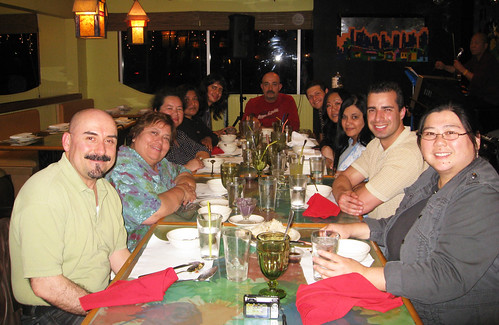
So for my Foodbuzz 24, 24, 24 meal, a group of 11 of us feasted on 15 dishes, which included steamed rice and garlic fried rice plus there were a selection of 3 different Filipino beverages to choose from at Barrio Fiesta in Eagle Rock, CA. By the way, as you read the descriptions of the foods and beverages we dined on, I'll try to link the menu item name to an online recipe so that you can try the dish out for yourself at home.
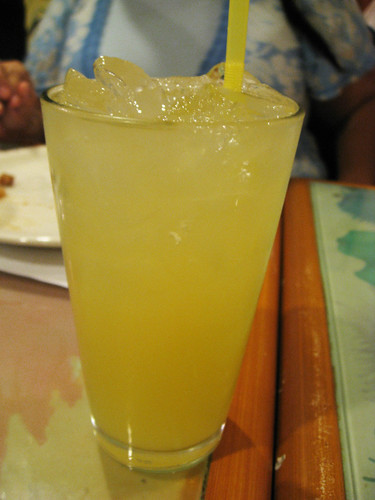
Let's talk beverages first. As mentioned, there were 3 choices. I was the only one who ordered the Gulaman At Sago drink. It's a drink that sometimes listed under the dessert section on Filipino restaurant menus, but it's not so sweet that you can't have it as part of your meal. It's a popular drink, especially during the hot summer months in the Philippines and its ingredients are simply water, sugar, gulaman (agar-agar) and sago (tapioca pearls). It's similar to a Japanese boba drink, but its flavor will remind you of brown sugar.

Buco is basically young coconut juice which is drunk on its own or poured into a glass with young coconut pieces. Coconut juice (or water) is prevalent in most Southeast Asian as well as Latin American and South American countries, so there's nothing uniquely Filipino about it, but still it's a refreshing drink.

The third drink was similar to a lemonade, but made using Calamansi, a small citrus fruit that is considered native to the Philippines, but also grown in other parts of Southeast Asia. Calamansi looks like a small tiny orange, but tastes like a combination of orange and lime. Basically, it's sweet and tart at the same time. Calamansi is a staple in the Filipino food culture. It's used for making marinades, mixed with soy sauce or fish sauce and used as a dipping sauce or made into a drink and generally speaking, could be a substitute for lemon or lime in most recipes.
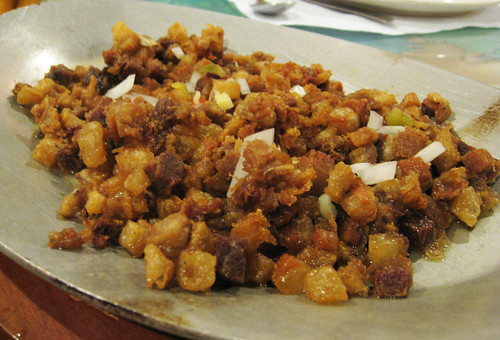
For our appetizers, we shared Lumpia Shanghai and Sisig. Lumpia Shanghai as I already mentioned is a Chinese-inspired dish. Sisig means "to snack on something sour." In some cases, it refers to fruit that's dipped in vinegar and salt and in other instances, it refers to a certain way that meat and fish is prepared. Usually, the meat is marinated in a sour liquid like lemon juice or vinegar than seasoned with salt, pepper and other spices. In the past, Sisig was usually made from parts of the pig's head, liver or generally whatever is leftover from the pig. This is still done as home cooking or at more traditional Filipino restaurants. Modern Filipino restaurant versions of sisig is usually crunchy and chock-full of chicharon (pork rind) bits and sometimes seasoned with varying doses of chili peppers and calamansi juice. This was the version which we had at Barrio Fiesta. Another thing to note is that it's usually considered bar food and the fattiness of the pork goes really well with a bottle of beer (or two).
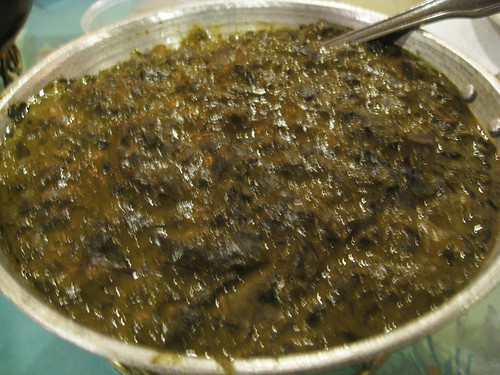
Next came our entrees. The first two entrees definitely showed a Malaysian and even a Thai influence in their use of coconut milk and even in spice factor. The spice factor is a bit unusual because Filipino food isn't considered a spicy cuisine. However, coconut milk inspired dishes like Bicol Express and the Laing sa Gata (taro leaves) can actually pack some heat due to the addition of chili peppers, depending on the cook. Both these dishes are part of Bicolano cuisine (from the area of Bicol in the Philippines) which is famous for its rich and spicy dishes that are mostly cooked using coconut milk called gata and spiced with a very hot, local variety of chili called siling labuyo. Bicol Express can be a pork or a mixed seafood dish that can include anything from fish to squid to mussels. The Barrio Fiesta version actually wasn't that spicy, but I've had it at other Filipino restaurants where it was.

When the Laing sa Gata came out, this was the first time any of my friends ever saw taro leaves prepared in this fashion. Actually, I think this was the first time any of them had ever eaten taro leaves. Just like the Bicol Express, this dish could have been spicier, but no one seemed to miss it. Quite a few commented on how it was very similar to an Indian dish known as spinach saag minus the spinach and the coconut milk. When it comes to this dish, my Mom had mentioned to me that if it's not prepared correctly, it'll actually make your mouth and throat itch. Thankfully, it was prepared well.
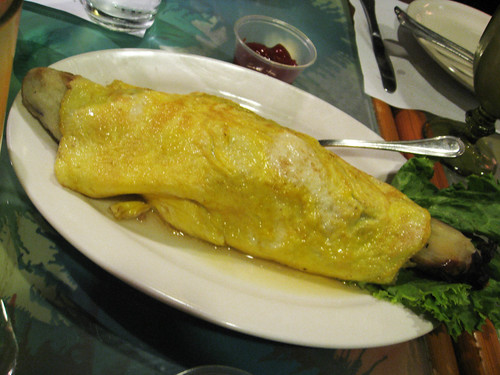
Two other dishes in our menu represented two different adaptations of Relleno, the Spanish tradition of stuffing young roosters and turkeys. One of the dishes was called Rellenong Talong, which is eggplant stuffed with ground pork and than wrapped inside an omelette. I also chose this particular dish to show different uses of eggplant, which is a popular vegetable in Filipino cuisine. When it comes to eggplant, we'll cut it and fry it or sometimes, we'll dip it in egg and than fry it. As a part of a recipe, you'll see it in Filipino dishes like Kare Kare and Pinkabet, both of which I'll talk about later on. Rellenong Talong is usually eaten with banana ketchup or regular ketchup.
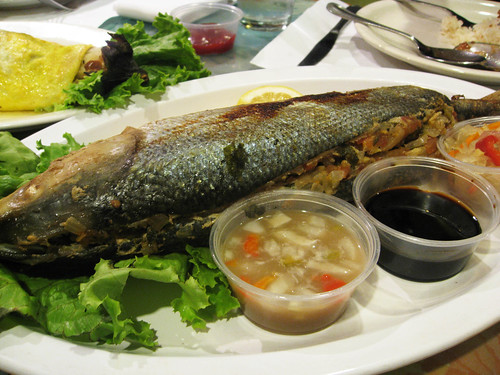
The next Relleno dish was the Inihaw na Bangus or Stuffed Bangus. Bangus is a silvery milkfish that is very much a staple in the Filipino diet. One of the favorite ways to prepare it is to chop tomatoes and onions, squeeze calamansi over it and than stuff it in the bangus before grilling it. Similar to Vietnamese dining, it was accompanied by different dipping sauces that included soy sauce and a lemon, onion and carrot mixture where you can decide how much or how little to add to the fish for additional flavoring.
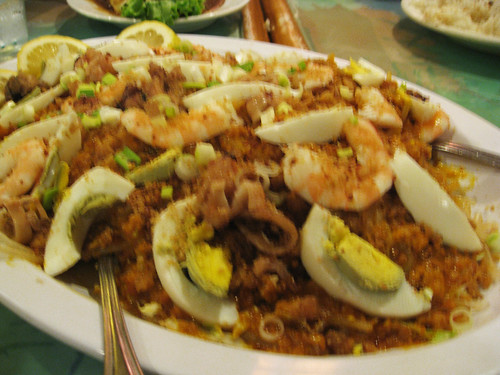
Another Chinese inspired dish was the Pansit Malabon, but this is unlike any Chinese noodle dish you may have ever encountered. Taking inspiration from the city of Malabon, which is a fish trading town, the basic ingredients for Pansit Malabon include hard boiled eggs, green onions, shrimp and fried pork skin. The basic ingredients for the sauce is made of shrimp juice, flour for thickening and atchuete oil. A definite Filipino twist on Chinese noodles.
Kare Kare is one of my favorite comfort foods and no matter how many versions I've tried at other Filipino restaurants, Mom's is always the best. The reason I included Kare Kare on the menu is that first, it's a very popular dish with Filipinos, but to also show that we have our own version of stews. Most people think of Filipino food as mostly fried foods, but there are actually quite a lot of dishes that are stews or have some kind of sabao. Sabao refers to the liquid in the dish that is spooned over your rice.

The ingredients that are in Kare Kare are primarily oxtail and assorted vegetables like green beans, eggplant and pechay (a Filipino cabbage) and cooked in a peanut butter sauce. There's a little bit of the Thai influence because of the use of peanuts as a sauce and at our meal, there was a comment on how Kare Kare reminded someone of an African Groundnut Stew. Kare Kare is also served with bagoong, which is a sauteed salted shrimp paste, similar to what's produced for Vietnamese and Thai cuisine.

Speaking of bagoong, while most bagoong is made up of shrimp paste, in other parts of the Philippines, the bagoong is more anchovy-based. Bagoong is used as an additional flavoring that you can add to already cooked dishes and in some cases, various fruits. I grew up eating bagoong smeared on mango slices.

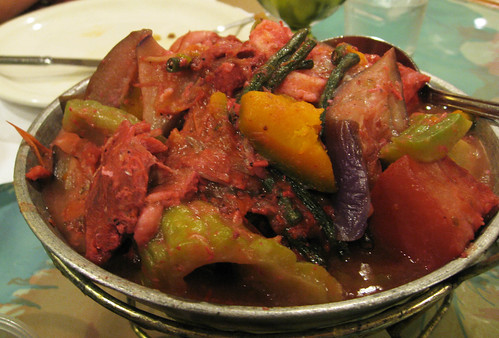
Bagoong can also be a component in a recipe as in Pinakbet. Pinakbet can either be just vegetables or vegetables and pork. At Barrio Fiesta, it was served with pork and it's a dish not hard to miss since you actually see the bagoong flecks on the vegetables as well as both the sabao and the pork taking on bagoong's pink coloring. Pinakbet might not be the dish for you, if you're not into strong, pungent shrimp flavoring.
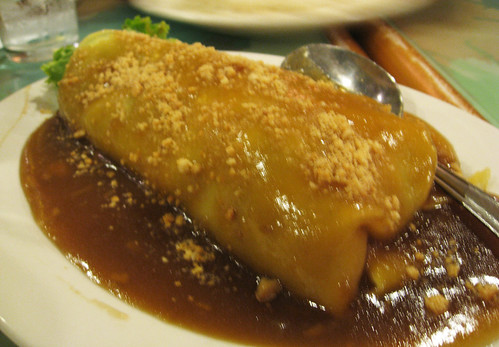
Another dish that was on the menu was Sariwang Lumpia (or Fresh Lumpia). It's a dish that harkens to Vietnamese cuisine where rice wrappers are used to wrap various meats and herbs, dipped in sauce and than eaten, but uses uncooked fresh lumpia wrappers that are thicker and crepe-like. Fillings are generally vegetarian, but can include ground pork or other meats while the sauce is usually made up of soy sauce, garlic, water, cornstarch and sugar.
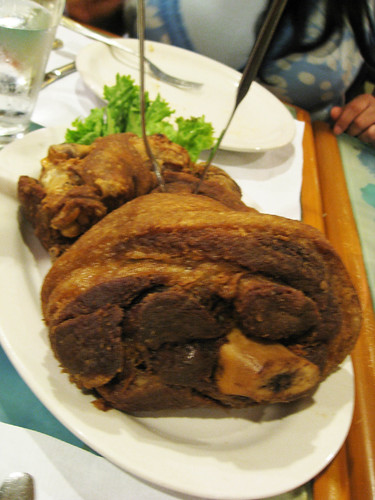
One of the dishes that got the most love from the group was the bad, but good for you Crispy Pata. It's simply a pork knuckle or hind leg that is deep fried to golden goodness and comes with a dipping sauce that includes soy sauce, vinegar and garlic. Of course, the best part is the crackling skin, but the pork meat can also be juicy and tender. If you didn't know already, we Filipinos love our pork and the Crispy Pata is definitely a dish you'll generally see ordered at Filipino restaurants.
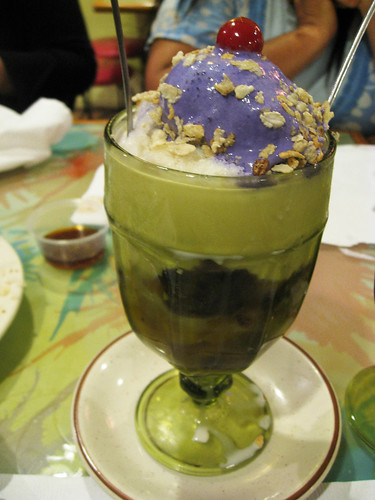
With 15 dishes, including two types of rice, it was definitely time for dessert. One was Halo-Halo, a Filipino shaved ice dessert, of which there are variations in practically every Southeast Asian country. The word "halo" means mix, so Halo-Halo means mix mix and that definitely describes this dessert. Halo Halo is a mixture of shaved ice and milk (anything from regular milk to evaporated milk to even coconut milk) to which are added various sweet beans, fruits and jellies and served cold in a tall glass or bowl. Sometimes, it's topped with ice cream and even a slice of leche plan (a Filipino version of Spanish/Mexican flan). Generally, you can either eat the ice cream first or mix it all the ingredients together and than use spoon and straw to finish the whole thing off. The Barrio Fiesta version had a scoop of ube ice cream and also a sprinkling of the Filipino version of rice krispies.
The last dessert was the Ube Halaya or purple yam pudding. Ube is a purple yam that is quite prevelant in Filipino desserts from ice cream to cake to rice cakes, etc. This dessert got more of a reaction than the Halo Halo because it was something that most of my friends haven't tried before plus the flavor of the ube was much more concentrated. Unlike a regular pudding, this dessert is actually more paste-like than creamy and is actually quite rich. There's only about 5 ingredients needed for this dish, which includes the ube, coconut milk, evaporated milk, sugar and butter.

So in this one meal, we were able to touch on Spanish, Chinese, Malaysian, Thai and Vietnamese and perhaps, even Indian and African influences and not only that, I was able to showcase Filipino food to those who haven't really been indoctrinated in my cuisine before. I have to say that some of the best comments I heard all night was "I've never seen that before" or "What is that?" The lumpia was easily the most recognized food of the entire evening and even the Pansit Malabon, which is inspired by Chinese noodles, was met with a question mark. Overall, the evening was really about taking those in attendance on a culinary journey and hopefully, that journey has given them a better and deeper appreciation of Filipino Cuisine, but also a willingness to go beyond lumpia and explore what else Filipino food has to offer.
To see pics, go to:
http://www.flickr.com/photos/la_addict/sets/72157617356969304/

Barrio Fiesta
4420 Eagle Rock Blvd
Los Angeles, CA 90041
(323) 259-5826


Friday, April 24, 2009

Chocolate Afternoon Tea at the Langham Hotel

One evening I was online, not doing anything in particular, until across my twitter feed, I saw a tweet from @tarametblog flash by about a Chocolate Afternoon Tea that she experienced at the Langham Hotel in Pasadena. I was soon scrolling down until I came to her message and it included a link to her blog write-up. Upon reading it, I was hooked and thanks to Tara and the Langham, my guest and I were hosted for this wonderful chocolate experience.

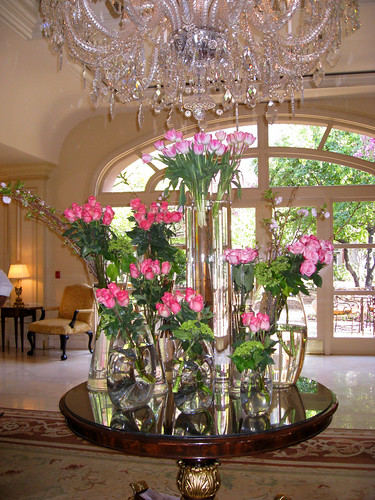
Before we even got to the Lobby Lounge where the afternoon teas are held, it was hard not to go through the hotel lobby and the courtyard garden without taking photos. The courtyard had a really pretty setting flanked by trees along two paths that split on either side of a fountain pool. Soon our chocolate cravings were calling to us, so we stopped lingering and finally stepped through the doors.

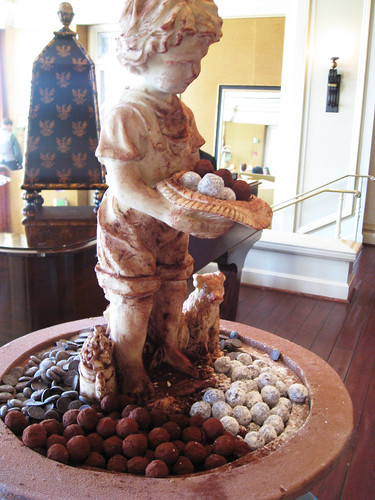
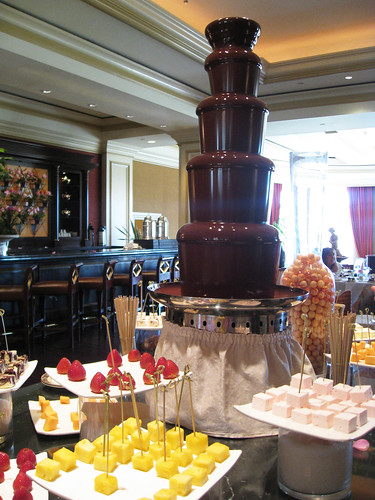
Walking through the Lobby Lounge, there were assorted couches with tables and tea settings. On both sides of the room, there were chocolate sculptures that were done by the in-house pastry chefs. We almost stopped when we saw the chocolate fountain with the assorted fruits and other treats, because it looked mighty tempting, but we weren't quite ready to dive in just yet.

After we were seated, we were given the menu so that we knew what to look forward to and after perusing a selection of teas, I opted for the Mayan Truffle Tea while my friend went for the Chocolate Mint Truffle. While we were waiting for our sandwiches to arrive, we were each offered a complimentary glass of champagne.

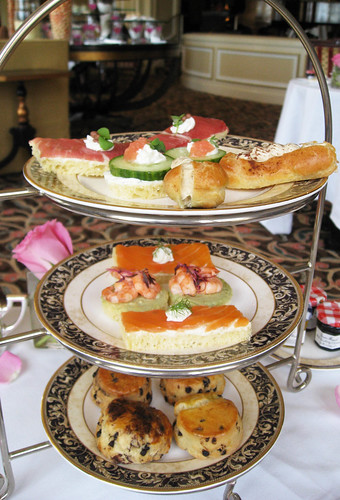
Soon after, 3 tiers of tastiness arrived and those 3 tiers included the scones and sandwiches. Where were the sweets you may ask? I'll get to those later, trust me.

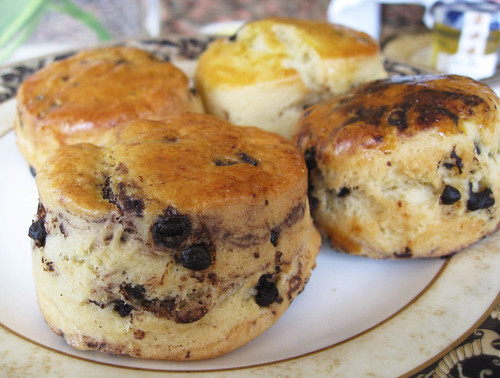
I always start with the scones and we had two different kinds, a chocolate chip scone and a marble chocolate chip scone, which actually tasted the same to me. The only difference is that one had marbling and the other one didn't. I did like both of them though. I've had scones in the past that were like hockey pucks, but these scones were just right. Firm on the outside, but flaky and a little moist in the inside. As for the scone accompaniments, the wild blueberry jam was wonderful, the Devonshire cream was light and fluffy, but the Lemon Curd didn't quite do it for me. It did have a nice fresh consistency, but it was either too tangy or too sweet or maybe too much of both? Regardless, I didn't go for seconds.

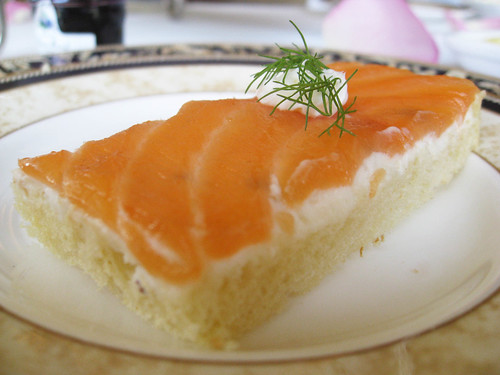
Then I started to make my way through the sandwiches. One thing to mention is that each sandwich had an essence of chocolate. It was all about subtlety and not big flavors. First, there was the Smoked Salmon, Roasted Fennel and Cocoa Nib Mousse. I'm not exactly sure what fennel is supposed to taste like, but I did get a tiny hint of bitterness from the cocoa nib mouse that paired well with the smoked salmon.

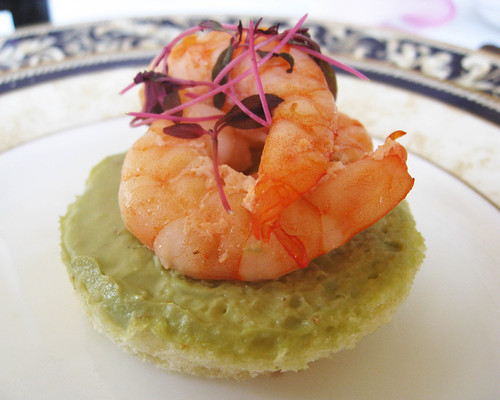
Next was the White Chocolate and Avocado Mousse with Vanilla Marinated Shrimp. Technically, white chocolate isn't actually chocolate, but still it went nicely with the avocado mousse and both really went well with the shrimp. My one issue with shrimp was that it was overcooked, which made it dry and a little chewy.

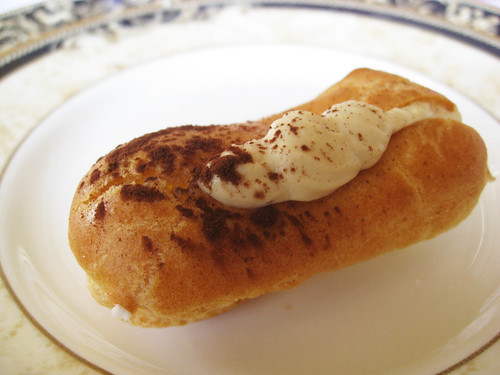
The Foie Gras Mousse Profiterole with Chocolate Dust was actually my favorite of all the sandwiches. I liked how the profiterole was light and airy and that the chocolate dust cut into the sweetness of the foie gras mousse so that everything tasted in synch.

After the Profiterole came the Cucumber, White Chocolate Mint Mousse and Grapefruit sandwich round. This was actually my least favorite of all the sandwiches. The cucumber was too thick plus I think that the mint part of the mousse was too subtle and the grapefruit was lacking in tartness.

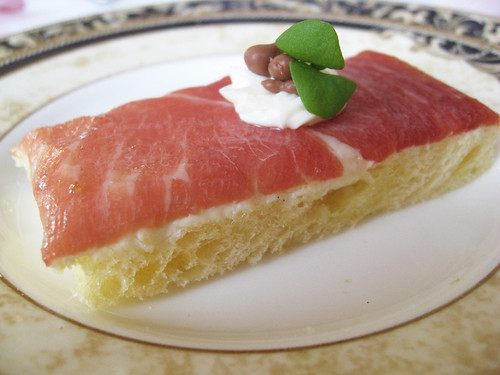
The savory portion of this tea ended with the Serrano Ham, Burrata Mousse with Chocolate Caviar. That ham was tasty. I could have easily just eaten more of the ham by itself without anything else, but I liked how the burrata mousse and the chocolate caviar balanced the saltiness of the cured ham.

After our sandwiches, it was time for dessert. Our server actually took us on a tour of the dessert station and the fondue station and basically explained what the various offerings were. There was also an angel statue where you could sample both Earl Grey truffles and Cardamom truffles.

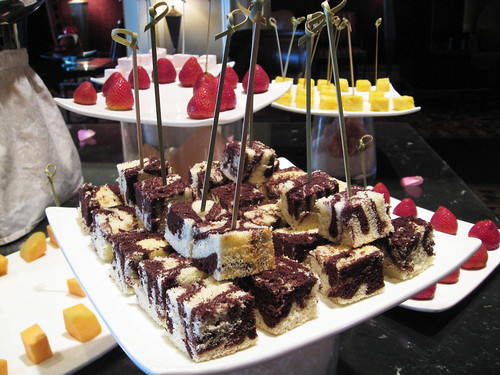
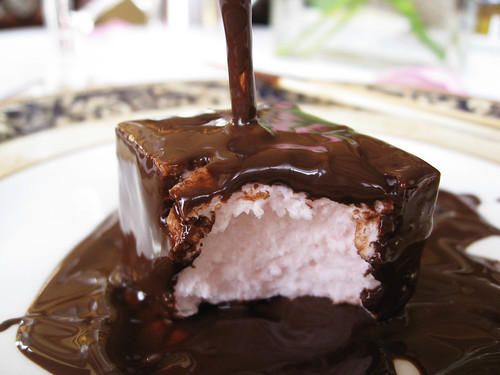
We started with the chocolate fondue station. The dipping options included marble cake, nougat, lemon marshmallows, peppermint marshmallows and assorted fresh-cut fruit. First, in regards to the chocolate fondue itself, it was decadently rich and I loved the flavor. The one thing I would change is to make it a teeny thinner. It was a bit too thick which made the food kind of glop on the plate after we coated them. My choice of dippees or is it dippers included one juicy strawberry and one of each of the marshmallows. I liked how both the lemon and peppermint marshmallows were subtle in flavor so as to not clash with the richness of the chocolate.

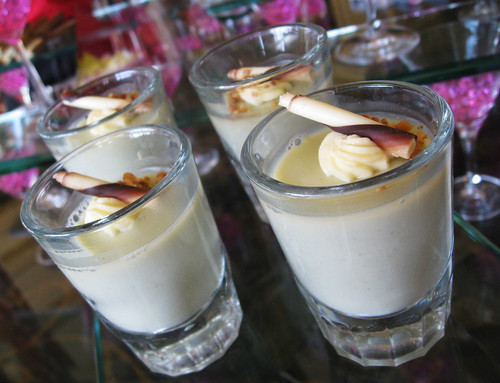
I was actually feeling really stuffed, but somehow my friend and I rallied and headed to the dessert station where there were 14 different chocolate inspired desserts. We ended up sharing 9 of them, although we only took little bites (so I tell myself anyway). My favorite was the White Chocolate Green Tea Panna Cotta. The panna cotta was rich and creamy and it was nice how the white chocolate cut into the bitterness of the green tea to make it well balanced in flavors.

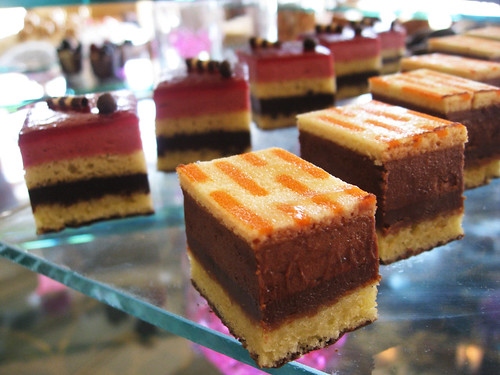
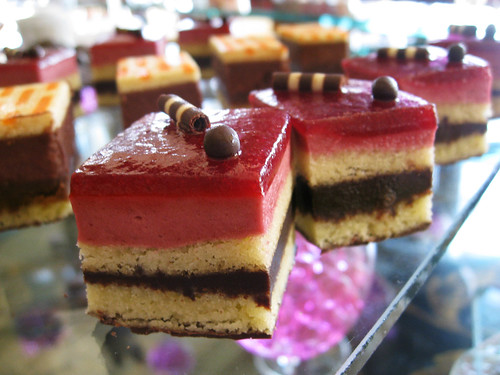
Both the Milk Chocolate Orange Gateau and Chocolate Raspberry Gateau were also excellent. I do think that the orange could have been brought out more, but the raspberry had a lovely sweet tartness to it and both cakes were rich and moist.

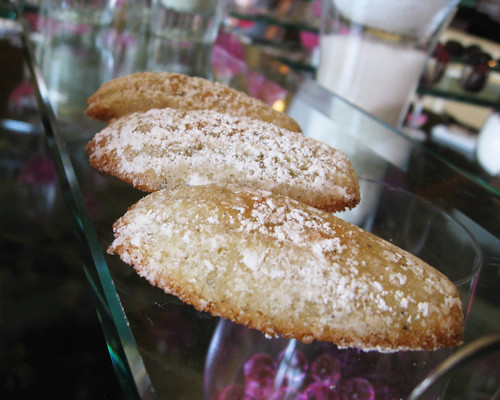
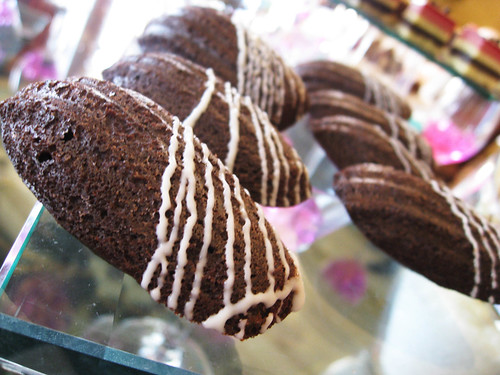
The Chocolate Madeleine and the Orange Black Tea Madeleine were disappointing. Both of them were dry, which is too bad, because the flavors were spot on for the Orange Black Tea Madeleine.

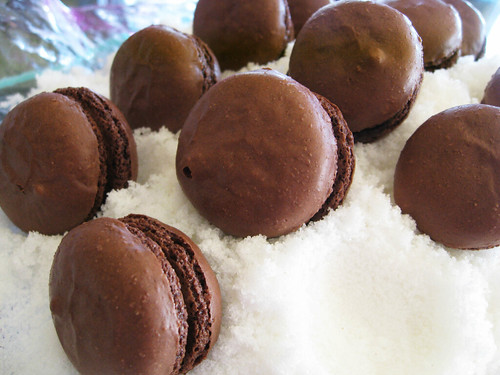
I'm usually not much into macaroons, but the Chocolate Macaroons were little bites of heaven. That chocolate cream filling was just delicious and the cookie was light and airy.

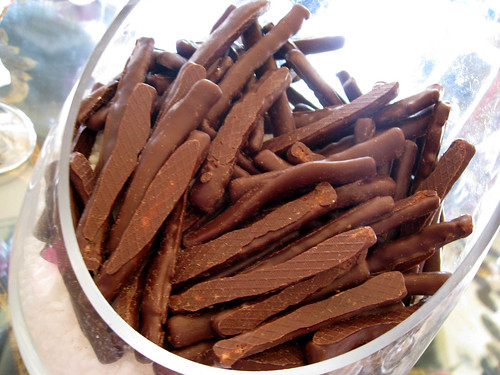
The Chocolate Coated Candied Orange Sticks were pretty good, although a tad too sweet. However, when you bit into one of those sticks, it tasted juicy, like biting into a real orange and that was a tasty surprise.

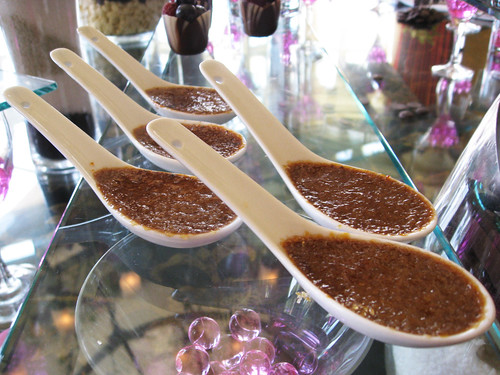
I liked the presentation of the chocolate brulee in a serving spoon and I enjoyed the intense caramelization coming from its surface. I also think that I tasted coconut, although there was no mention of coconut as being part of the ingredients.

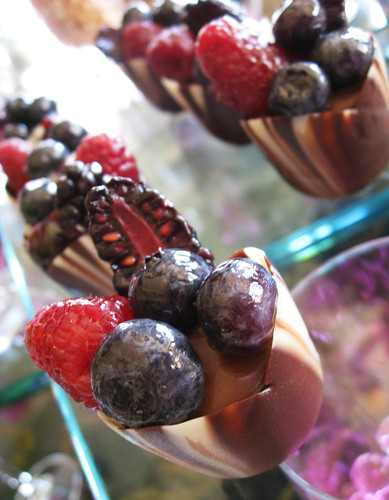
The final, but not the least, dessert was the Chocolate Cream Fruit Tart. I gotta say that anything to do with chocolate cream, the Langham does superbly. That chocolate cream was rich and creamy and matched well with the tart berries.

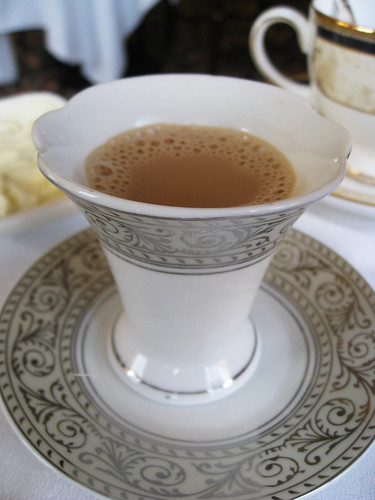
So you think we'd be done by now, right? Nope, there was one last item. Basically, the end of the whole experience comes in a cup of liquid chocolate. You had your choice of 3 different kinds. I went for the Spicy Chocolate and my friend went for the Hazelnut Chocolate. I got to sample the Hazelnut Chocolate and found it too sweet, but I really enjoyed my Spicy Chocolate. The one thng I'd adjust and maybe, it's just a preference thing, is the temperature. Both of the liquid chocolates weren't hot enough. They seemed a little bit lukewarm. I'm not sure if that's the way they are supposed to be served, but I would have enjoyed mine even more if it was a little hotter, temperature wise.

Overall, it was a wonderfully, relaxing and sweet way to spend a Sunday. The ambiance was wonderful and our service was excellent and except for a few little things, I absolutely enjoyed this chocolate-themed foodie activity and if you're a chocolate lover, then this Chocolate Afternoon Tea is definitely for you!

By the way, the Chocolate Afternoon Tea is $59 per person and served Sundays from 12:00pm to 4:00pm. For reservations, please dial (626) 585-6218

To see pics, go to:
http://www.flickr.com/photos/la_addict/sets/72157617025174919/

The Langham Hotel and Spa
1401 South Oak Knoll Avenue
Pasadena,, CA 91106
(626) 568-3900

Tuesday, April 21, 2009

Street Food: Oaxacan Quesadillas and Churros

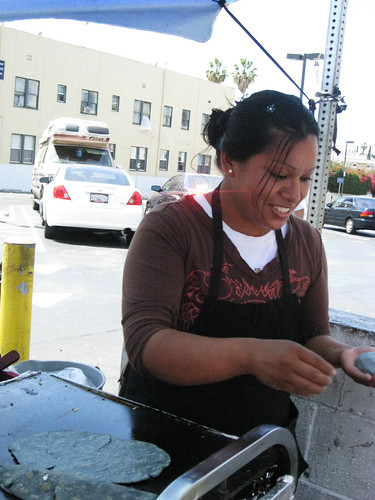
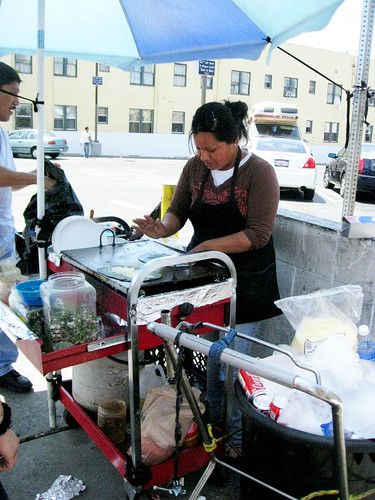
Do you know what's one of the best things about having foodie friends? Simply, as one person there's no way you could possibly know about all the great eats in the city, but if you have many friends who share your culinary passions, you're always bound to hear about some new dining experience that's just too fantastic to pass up. Well, my friend Robert, heard about and eventually checked out a street cart where a woman makes Oaxacan quesadillas using blue corn tortillas and usually towards the later afternoon, a churro truck will also park within a hop away from this cart. Oaxacan quesadillas and churros? How can one pass that up? I certainly didn't and Robert led the way.

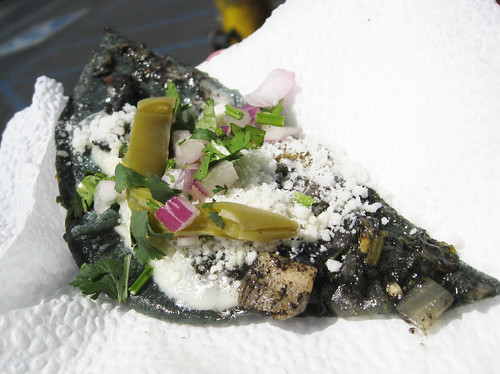
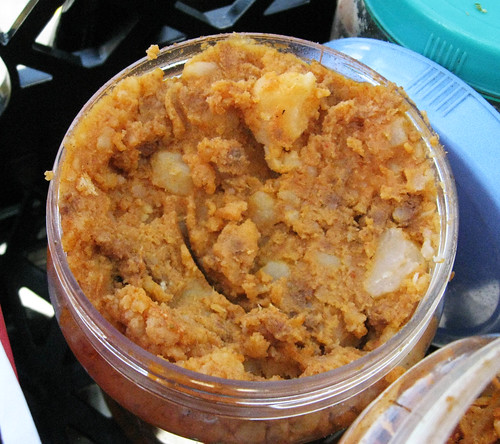
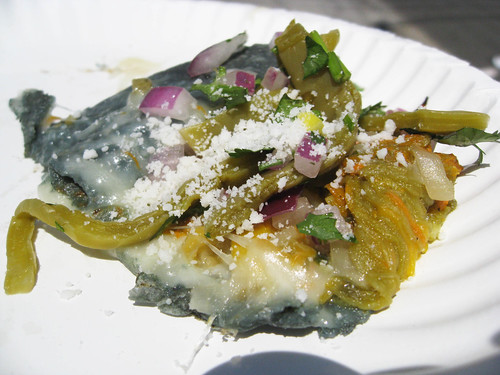
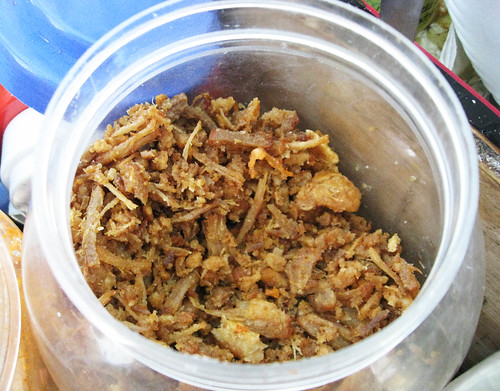
So last Sunday, off we went. When we arrived, our group of 5 crowded around the cart and after talking to the lady, we found out that we had an option of 6 different fillings: chicarrones, squash blossoms, chicken, frijoles, chorizo and potato and huitlacoche. We decided to order one of each, except for the frijoles and just share them. She was even nice enough to cut the quesadillas in 4 to 5 sections for easier eating.

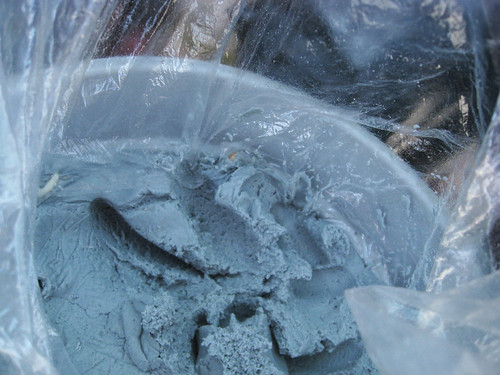
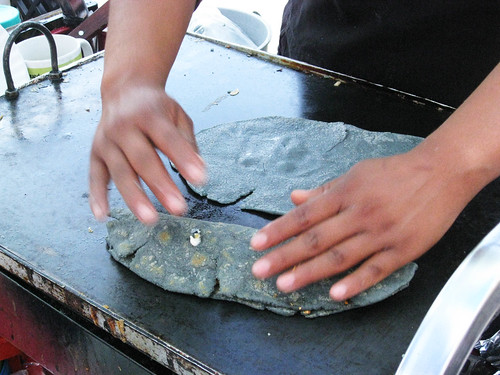
The whole process was simple. First, she would get a ball of blue corn masa that was in a plastic bag next to her.

Then she'd pat it between her hands and than start patting it flat on the stove's surface. I can't even imagine how hot that surface was, but it didn't seem to phase her.

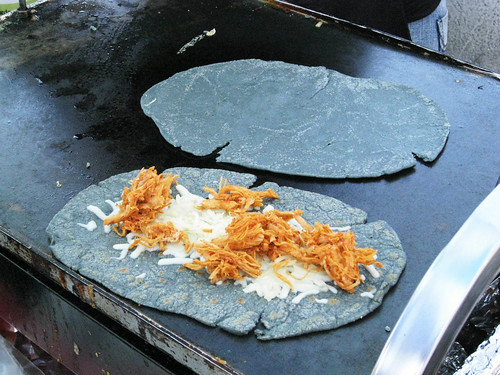
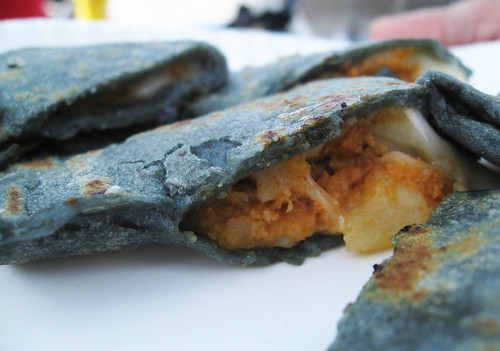
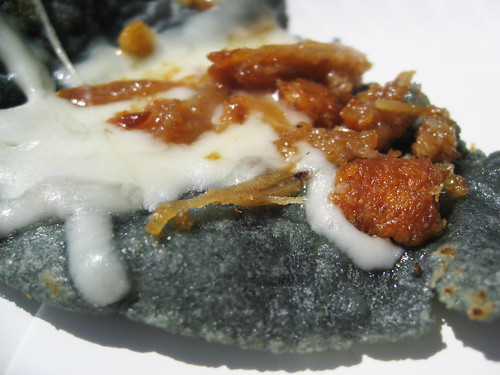
Afterwards, she'd add a handful of mozarella cheese and the filling of your choice and let it lay flat for a while before folding it in half. Sometimes it was ready to go and other times, she'd let it still cook for a little while before putting on a paper plate and handing it to you.

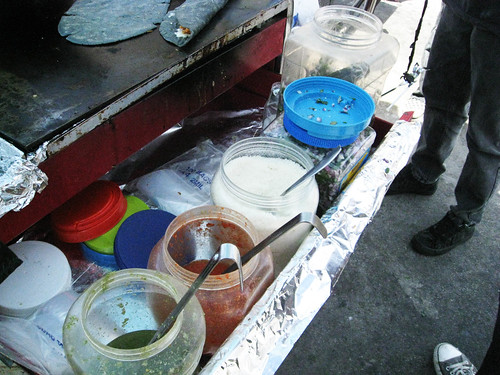
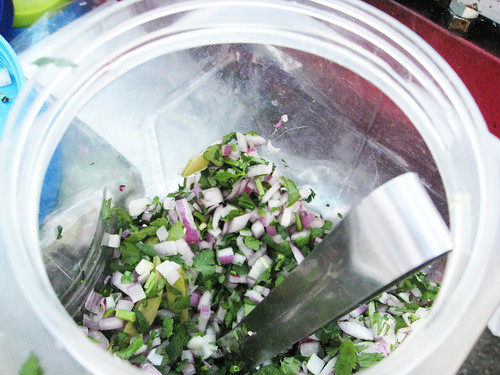
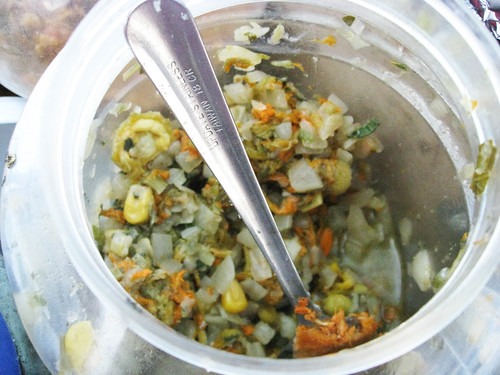
Once you got your quesadilla, she had some additional ingredients that you could either top your quesadilla with or put inside of it. There was a mixture of nopales, red onions and cilantro in one container. You could also add a sprinkle of cotija cheese or a spoonful of a really hot salsa or a milder green salsa.

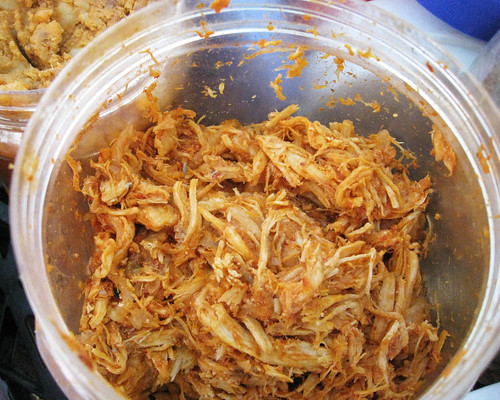
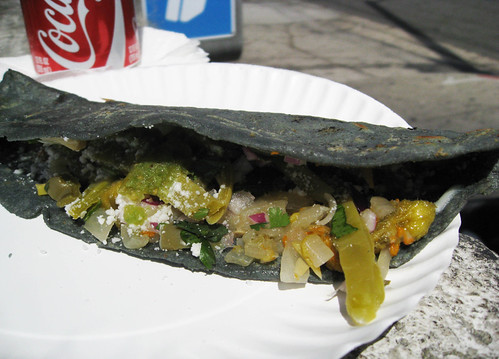
As mentioned, our group sampled 5 of the various fillings. First, we had the chicken quesadilla, but before I talk about that, I do have to say that I really liked the blue corn tortillas. It had a nice medium-thick texture and there was a nuttiness to the masa that I also really enjoyed. What was nice about the chicken was that it wasn't dry and it had a nice flavor to the marinade.

Our second quesadilla had a huitlacoche filling, sometimes referred to as corn smut or Mexican truffles depending on who you talk to, but basically it's a fungus. Huitlacoche is actually quite delicate, but can add a smoky, earthy and pungency to dishes like tamales, stews and in this case, quesadillas. I actually thought the huitlacoche in this case had a mild smokiness to it and I liked how the corn gave it a hit of sweetness.

Third on the rotation was the chorizo and potato quesadilla. This was actually my least favorite of the 5. The filling was mushy. I would have preferred actual chorizo sausages that were cut and grilled and than put in the quesadilla. That would been a big improvement.

Our fourth quesadilla was a vegetarian option that consisted of squash blossoms, corn and onions. If this was the only option available, I wouldn't have missed the meat at all.

Finally, my favorite was the chicarron quesadilla. Come on, it's fried pork. What's not to love?


By this time, all our sharing amounted to about one quesadilla and a quarter for each of us. This type of family-style sharing worked perfectly because we all got to sample a little bit of each filling and when it was time for us to order a full size one, we already knew what we liked. By the way, we did each filling individually because we wanted to taste them on their own, but you can choose more than one ingredient for your quesadilla. I went for the squash blossom and chicarrones combination, which was absolutely delicious.

What a great find! The quesadillas ran $3.00 each and she had also different drinks ranging from $1 to $2. The way you pay is pretty much on the honor system. Once you're done eating and ready to leave, that's when you pay her. What's nice is that whenever she collects money, she always puts on gloves and that's definitely smart on her part. Now this is street food worth driving for.

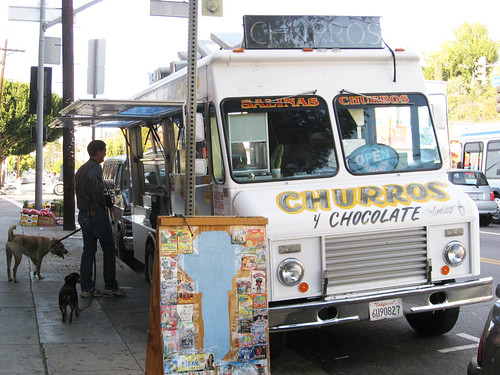
Sometimes parked down the street from the quesadilla lady, you'll find Salina's Churro Truck. Apparently, it used to be a pushcart so to move up to a truck speaks well for their churros.

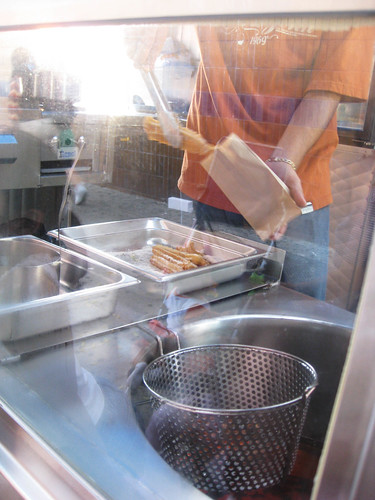
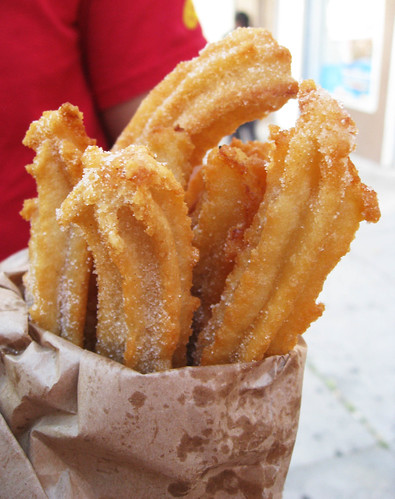
Inside the truck, they have a funnel which pushed out the dough and immediately went into a deep fryer. Once they're fried up, the churros were coated with sugar and put into a brown bag ready to be consumed at will.

8 for $3.00 is a heck of a bargain. I found them to be a little doughy for my taste. I would have preferred that they were fried a little bit longer, but I appreciated their golden crispiness.

Overall, it was a wonderful eating day. Delicious quesadillas, golden and crispy churros and all for under $10? Not only is this affordable dining, it's also a fun culinary experience and one of the things that really makes LA a great eating town.

To see pics, go to:
http://www.flickr.com/photos/la_addict/sets/72157617005224501/

Note: When I checked out both the street cart and the churro truck, it was a Sunday. When I got there at 12:30 PM, the quesadilla street cart was already there. I actually left around 2:30 pm, but when I came back at around 5:00, she was already gone. I'm not sure as to how long she stayed or which other days she's at her spot. Apparently, the churro truck arrives between 3 and 4 pm. Both are situated on Echo Park Boulevard just around the corner from Sunset Boulevard.

Monday, April 20, 2009

The Downs, Ups and Sideways of my Cambodian Dining Journey

What I love about LA are the enclaves of ethnic neighborhoods scattered all over the county where certain populations will settle and as a result, restaurants featuring the cuisine follow suit. I thought I've dined in all of them from Koreatown to Thai Town to Little Ethiopia and more, until I got wind of Little Cambodia in the Long Beach area. Now that was unexplored territory, as was Cambodian food in general. I felt like an astronaut flying off to discover a new planet.


Before diving in, I did a little bit of research and one thing I found out right away is that most Cambodians prefer to call themselves Khmer, which means "hill." They also call their country Kampuchea or Srok Khmer. Another interesting tidbit is that Khmer people are descended from a mix of ethnic groups, and at one time was a Hindu-based culture. So when looking at a menu, especially at restaurants where Cambodian isn't the main cuisine, look for the word "Khmer" to help you identify Cambodian dishes.

Cambodian Cuisine has Indian, Chinese, Thai and Vietnamese influences. The Indian influence comes in the form of being taught the the art of blending a spice paste using many ingredients like cardamon, cloves, star anise along with native ingredients like lemongrass, garlic, shallots and more. This spice paste is referred to as ""kroeung", which is commonly used in Cambodian cooking. The many variations of rice noodles, stir-frying as a cooking method and also the use of similar Chinese vegetables in their dishes signify the Chinese influence. Just as in Thailand, fermented fish paste or prahok adds a unique flavor to Cambodian cooking while spring rolls made from rice paper stuffed wiith fresh vegetables and herbs and Banh Chiao, a Khmer version of the Vietnamese crepe, shows how Vietnam left its mark.

The most commonly eaten meat is actually fish and in fact, a popular Khmer dish called amok uses a kind of catfish steamed in a coconut based curry. Beef and chicken are usually stewed, grilled or stir-fried. Seafood favorites include clams, cockles and crayfish while more exotic delicacies include everything from frog, turtle and even tarantulas.

So now geared with some info, it was time to start my journey. First stop was at Sophy's Thai and Cambodian Restaurant. One thing to mention is that all the "Cambodian" restaurants I visited featured other Asian cuisines, primarily Thai. I'm not sure about the Thai-Cambodian connection, but if anyone has that insight, I'd love for you to comment on it. As for Sophy's, I went with a friend and since there was only two of us, we kept it to 3 Khmer dishes. Of the 3 dishes we tried, I only really liked one of them and only because it was the best of the so-so.

The first to arrive was the Somlaw Kaykoh, a soup with an assortment of veggies, roasted rice and pork ribs. If you didn't know already, reading my blog, I have a pet peeve about veggies. They should not be cooked to a mushy submission and the veggies in this soup definitely lacked any kind of crispness. The soup itself was bland. You would think that the pork would add flavor, but all it really added was an oiliness to the broth that wasn't very appealing.

Khmer Ginger Deluxe came next and it was comprised of chicken stir-fried in garlic soybean sauce and black pepper and topped with golden crispy ginger. The strong flavors of the ginger were quite evident, but that was about it. I didn't taste any garlic or black pepper at all in this dish. Right now, I'm batting zero.

The saving grace of this meal was the Beef Lok Lak with thinly sliced tomato, cucumber, onion and lettuce topped with stir-fried beef flank and served with a lime-black pepper dressing. It reminded me of a Thai Beef Salad. Once dressing was poured over everything and mixed it all up, I was loving it. I loved the tart and peppery flavors of the dressing. The meat was also tender which I definitely appreciated.

Based on just 3 dishes, I don't think it would be fair to pan the food at Sophy's. At least, I enjoyed 1/3 of my meal, but I was left with an overall feeling that I could take it or leave it. For now, I was ready to check out another restaurant.

Next up was a visit to New Paradise. The same friend who accompanied me to Sophy's came with me to this second Cambodian restaurant as well. New Paradise had a different ambiance from Sophy's. It's used a lot for large parties because in the middle was a large dance floor and a stage. In fact, during our meal there, a band with a singer was performing while some customers were doing their groove thing on the dance floor. Like before, we only ordered 3 dishes.

First to arrive was the Steamed Ground Pork, Salty Fish and Egg with Fresh Vegetables. The pork, fish and egg mixture reminded me of a soft moist meatloaf. I'm actually not sure how I completely feel about this dish. On the one hand, the texture wasn't that appealing, but I liked the salty, meaty, slightly fishy flavors. Also, the raw veggies surprised me. Usually, when raw veggies are served, they're used as some kind of wrap or holder (e.g. lettuce to wrap Korean bbq in or lettue cups), come with a dip or are part of a salad. These were just sliced or chopped and except for the cucumber had a slight bitter bite to them. In a way, the contrast between crispy bitterness and soft saltiness wasn't too bad. It was interesting to try this dish, but I wouldn't necessarily order it again.

Next was the Fish Filet with Lemongrass. It's hard to go wrong with almost any type of fried fish and this dish was no exception. I think the lemongrass must have been finely chopped and added to the batter the fish was fried in. There was a definitely lemony-herby taste to the fish which I liked and I appreciated how the batter wasn't overly done.

Again, the last dish was the star of the show and that was the Grilled Beef Sirloin with Anchovy-Sauced Veggies. The beef was tender and juicy and I totally fell in love with that anchovy sauce. It was very similar in taste to Filipino anchovy sauce. I think there was also a squeeze of lemon or lime in that sauce, because there was also a tartness that went well with its saltiness. I could have just eaten that one dish and would have been more than satisfied.

Based on a 3 dish comparison between Sophy's and New Paradise, New Paradise was a clear winner, but for my next Cambodian dining experience, I wanted to try more dishes. My next stop was at Siem Reap and this time I had this dinner with members of my dining group. When I did some reading about the Cambodian restaurants in Little Cambodia, the general consensus was that Siem Reap was the best for this type of cuisine, so I was really looking forward to checking out the food there. For this third outing, we sampled 5 dishes.

Being a durian lover, once I saw a durian shake on the menu, I had to have it. It was wonderfully thick, creamy and had the pungent flavor of the durian that I have come to love.

As I was enjoying my durian shake, the first dish to come out was the Cambodian Style Fish Pancake. As with other dishes I've tried previously, this came with sliced fresh veggies which in this case were tomatoes and cucumber on a bed of lettuce. In truth, these pancakes weren't that memorable. I know that I didn't dislike them, but I wouldn't say that I was wowed by them either.

Next up was the Beef Jerky with Sweet Papaya Salad. The beef was without a doubt jerky, because it was certainly chewy, but I liked it. I'm not sure what marinade was used, but the meat had a good flavor and that sweet papaya salad was actually quite addicting.


Following the beef jerky came the Cambodian Ground Pork with Curry Sauce and with it, came another big plate of fresh vegetables. The ground pork was a little oily and also felt heavy. I'm not sure if the "heavy" description makes sense or not, but it still tasted good. I honestly wasn't sure what to do with the fresh vegetables so I ended up spooning the ground pork on rice, adding some of the veggies and mixing it all together. The rice and the veggies actually cut down the oiliness a bit.

The Cambodian Hot & Sour Fish with Baby Shrimp Soup came next, although I had expected it to come first. Regardless of its arrival time, it was a very good soup. It reminded me of Sinigang, which is a Filipino sour soup. They were quite generous with their catfish portions and I enjoyed the hits of salt that the dried baby shrimp added to the sourness of the soup.

Last on the menu was the Cambodian French Style Tender Beef with Anchovy Salad. What's interesting is that this is my third time having this dish and it always ends up being my favorite one of the evening. Three different restaurants and done slightly differently each time, but the meat is always tender and the anchovy sauce in all its pungent glory always puts a smile on my face.

So by now, I've been to 3 different Cambodian restaurants in Little Cambodia in the city of Long Beach. Each one was progressively better than its predecessor, but could I say emphatically that I was in love with Cambodian cuisine? Well, the answer is no. I didn't dislike it, but in my list of favorite Asian cuisines, it would be my last pick. It's hard for me to pinpoint what it was about Cambodian food that didn't attract me.

The best I can say is that it was lacking in bright, fresh flavors. At varying times, the food had no zing to it, was oily or just seemed "dark" in taste. I also missed my veggies. There weren't many cooked vegetable options and the raw veggies that came out had a slight bitterness to them that wasn't always appealing. Out of the 11 dishes I tried, there were only two dishes I really liked without question. One was a repeat across all 3 restaurants and the other was a soup that drew me to it because it was similar to a Filipino soup I grew up with and loved.

Safe to say, at that point, I was pretty much done with my Cambodian food explorations. While I wouldn't turn down an invitation to dine at a Cambodian restaurant, I had no plans to re-visit this particular type of food anytime soon. But...I bet you knew that was coming, huh? I heard about a Cambodian restaurant that was actually closer to me than the ones in Long Beach so I decided that one more try was in order.

Battambang was the name of restaurant and it was in the city of San Gabriel. What attracted me to it was an article I read about it written by Jonathan Gold. He made the food seem pretty enticing, so armed with that article, I went with a group of other foodie lovers for lunch. Our menu for that meal was based on Jonathan Gold's recommendations as well as suggestions from the restaurant manager along with requests from the other diners. Of the 11 dishes we had, 7 were Khmer, as far as I knew, and those are the 7 I'm going to be focusing on.

The first of the 7 was the Chicken with Lemongrass, a dish I also had at New Paradise. Battambang's version was more saucy and had good caramelization from the chicken being sauteed with the vegetables. The batter for this chicken was a bit heavier than I would have liked, but it was still a good dish - not better than the one at New Paradise, just different.

I totally gave a thumbs up to the Hot and Sour Banana Blossom with Fish Soup which came next to the table. The banana blossom added a different texture, both crunchy and soft and the soup had generous portions of fish with a tangy, sour broth that made my Filipino palate quite happy.

Fourth time's the charm for the Beef Lok Lak, which apparently is a dish that is also made with venison, but wasn't available that afternoon. I have to mention that at only one of the Long Beach Cambodian restaurants, this dish was also referred to as the Beef Lok Lak, which came without an anchovy salad while the other two dishes were referred to as either a Grilled Beef Sirloin or Cambodian French Style Beef, but both came with an anchovy salad. Can someone let me know if these are actually two different dishes or just variations of one dish? I'm a little unclear. As for the Beef Lok Lak at Battambang, it was tender, juicy and had a delicious marinade.

A couple of dishes after the Beef Lok Lak, the Steamed Fish Fillet with Coconut Milk or Amok arrived at the table. The steamed fish had a soft texture and it mixed well with rice. I think the coconut milk was a wonderful compliment to the steamed fish and gave it a nice hit of sweetness that wasn't overwhelming.

The Sadao with Fish was the least liked of everything we ate. There wasn't any issue with the fish which was nice and delicate, but the sadao, which was was an herb was very bitter and medicinal tasting. I'm used to bittermelon which can be quite strong on its own, but this sadao was much more powerful. In short, everyone ate around the sadao.

Second to the last Cambodian dish was the Cambodian Style BBQ Beef. The meat itself was a little dry, but had peppery notes from the marinade that was appealing. It came with raw cut veggies along with half a head of cabbage. I read somewhere and I can't remember where, but eating this dish was similar to Korean BBQ where the you'd wrap the meat in the large cabbage (instead of lettuce) leaves and eat it that way. It was tasty this way, especially if you poured a little chili sauce or fish sauce on the beef before wrapping it up and devouring.

The final dish of the meal was the Curry Fish, which is a deceiving, since it's actually made up of ground pork and fish. Although it was a little greasy, I really enjoyed its sweet with heat flavors. From Jonathan Gold's article, it was mentioned that you use the fresh vegetables to dip into this "Curry Fish" dish like chips and dip, which actually makes sense. I actually forgot about that part of the article and ended up spooning it on my rice and forgetting about the vegetables altogether.

Of the all the Cambodian restaurants I visited, Battambang was definitely my favorite. The bright flavors that I found lacking elsewhere were really very much evident at this restaurant and its Cambodian dishes. Where before I wasn't very impressed, Battambang really switched it around for me, but there is something I do want to touch upon again.

Earlier, I had mentioned how the menus of all the Cambodian restaurants I visited usually included other Asian dishes like Thai, Chinese or Vietnamese. It was if Cambodian food itself couldn't be the only player. I don't know whether it's because there aren't enough Cambodians who came over bringing their country's recipes and food culture or there's just a lack of Cambodian ingredients that doesn't allow for a more expansive Cambodian only restaurant. I don't have the answer. However, in each of the 4 Cambodian restaurants I visited, I always actively searched out the Khmer dishes, which is something you'll have to do as well if you decide to visit any of the restaurants above.

Expanding on these thoughts, a conversation with fellow blogger, Wandering Chopsticks started my wheels churning.. As I mentioned, I really enjoyed the food at Battambang, but after reading about WC's visit to Battambang and her mentioning that the majority of the dishes were really Vietnamese cooked by Chinese-Cambodians with only a small pocket of Cambodian dishes, it got me thinking. Did I enjoy the "Cambodian dishes" more at Battambang because they were actually Cambodian dishes cooked in a Vietnamese or Chinese way, so not really Cambodian at all? Compared to the Cambodian dishes I had at Little Cambodia and Battambang, the cooking styles seemed a little different, but heck, I'm just not sure.

I've been working on this blog entry off and on for 12 days just because I'm just so confused now about what's authentic or as close to Cambodian cooking as possible or what's not or maybe, the nuances are just too subtle for me to grasp between Cambodian food and other South East Asian Cuisines.

In the end, all I can really say is that there were hits and misses at each of the 4 restaurants I visited. When it's all said and done, even though I enjoyed the "Cambodian" food the most at Battambang, Cambodian cuisine is still on the bottom of my preference list when it comes to Asian dining. At least, I can say that I definitely gave it more than a fair chance.

Sophy's Thai and Cambodian Cuisine
3240 E Pacific Coast Hwy
Long Beach, CA 90804
(562) 494-1763

To see pics, go to:
http://www.flickr.com/photos/la_addict/sets/72157610225221556/

New Paradise Restaurant
1350 E Anaheim St
Long Beach, CA 90813
(562) 218-0066

To see pics, go to:
http://www.flickr.com/photos/la_addict/sets/72157610287084022/

Siem Reap
1810 E Anaheim St
Long Beach, CA 90813
(562) 591-7414

To see pics, go to:
http://www.flickr.com/photos/la_addict/sets/72157612095760906/

Battambang Seafood Restaurant
1806 S San Gabriel Blvd
San Gabriel, CA 91776

(626) 307-3938

To see pics, go to:
http://www.flickr.com/photos/la_addict/sets/72157613632747964/detail/

Friday, April 10, 2009

I'm In the Mood for a Taco

I'm in the mood for a taco! So let's share a virtual one together.
Does anything below catch your fancy?

Spicy Pork Taco (F) and Short Rib Taco (B)
from Kogi BBQ in Los Angeles, CA


Fish Taco
from Fish Taco Ensenada in Ensenada, BCN


New York Steak Taco
from Tacos Salceados in Tijuana, BCN


Swordfish Taco
from Tacos Salceados in Tijuana, BCN


Chicken Taco (F) and Beef Taco (B)
from Serrano's Mexican Kitchen in Duarte, CA


To check out my Flickr Photos (foodie and otherwise), please click here!

Thursday, April 09, 2009

If I Could Cook...Mango

If I could cook aka if I had the patience in general and I was in the mood for mango, below are some recipes that might actually get me in the kitchen, courtesy of images I saw on Foodgawker!

Shrimp Vegetable Mango Curry
- foodizm

Coconut Mango Pulihara
- Monsoon Spice

Mango Cobbler and Chocolate and Chili Powder Ice Cream
- Macheesmo

Mango, Lime and Ginger Muffins
- Mostly Eating

Mango Cardamon Bread Pudding
-Kumquat Connection

Bon Appetit!

Wednesday, April 08, 2009

Hawaiian Breakfast at Gardena Bowl Coffee Shop

Of all the places you think you'd find a restaurant where you can order a Hawaiian breakfast, I bet that a bowling alley wouldn't even cross your mind. Yet, there truly is such a place because inside the walls of Gardena Bowl is the Gardena Bowl Coffee Shop, where the menu consists of regular American fare right next to both Japanese and Hawaiian specialties.

For this particular trek to the city of Gardena, enjoying a Hawaiian breakfast was the goal and it was a goal my dining partners met with gusto. Between the 8 of us, the two dishes ordered the most were the Loco Moco and the Hawaiian Royal, although a couple did go their own way.

The Loco Moco is a dish that is unique to Hawaiian Cuisine. Although there are many variations of it, the essential ingredients include white rice, a hamburger patty, a fried egg with brown gravy. History has stated that the Loco Moco was created by the Inouye family, owners of the Lincoln Grill in Hilo, Hawaii in 1949. Apparently, a group of boys from the Lincoln Wreckers Sports Club were the inspiration for this dish. Looking for cheap eats, one of the boys, George Okimoto, nicknamed "Crazy" because of the wild way he played football, was nominated by the others to ask Nancy Inouye if she'd put some rice in a saimin bowl along with one hamburger patty with brown gravy poured over both items.

She charged a mere 25 cents, which was much more affordable than ordering a regular hamburger steak entree. Since the word "crazy" was loco in Spanish, this new dish was named "loco moco" in George's honor. Apparently, the word "moco" came into play simply because it rhymed. The boys didn't know at the time that moco meant "mucus" in Spanish. This off menu item soon made into Lincoln Grill's regular menu and became widely popular all over Hawaii. The egg was actually added later. My fellow diners who decided on the Loco Moco seemed quite content with their choice. I've had Loco Moco before, so I decided to pass on it in favor of the Hawaiian Royal.

I couldn't find much info on the Hawaiian Royal, so perhaps it just doesn't have as much of a colorful history as the Loco Moco. This particular dish has a plethora of ingredients that included Portuguese Sausage, Chasu, Green Onions and Eggs Over a Bed of Rice with Teriyaki Sauce. When it arrived, I already knew that I wasn't going to finish the whole meal, but I was going to do my best and take home the rest.

The Hawaiian Royal was already quite a mish mash, but I went ahead and mixed it more so that the teriyaki sauce was mixed evenly throughout the dish. Than I took my first bite. That's when I wished that I had asked for that teriyaki sauce on the side. It was a little too sweet. However, it did come with a little bowl of hot mustard, so as I ate each spoonful, I'd top it with the mustard to counter the teriyaki sauce. It was a tasty dish, , but I felt a little overwhelmed by it. I think there was just too much to it. I longed for the simplicity of the Loco Moco.

As mentioned, the two dishes above were what people ordered the most. However, one person opted for the Bacon Fried Rice and an order of the Portuguese Sausage and wasn't that impressed by either dish.

Someone else went straight for lunch and ordered a Chicken Katsu with Veggie Tempura and seemed quite satisfied with their choice.

Foodwise, I only get up early for dim sum, so this was a different direction for me, but it's always interesting experiencing how different cultures view breakfast. As a Filipina, breakfast consisted of everything from fried fish and rice to fried Spam, eggs and rice mixed with banana ketchup. As you can see, Philippines shares the same rice sensibility with Hawaii. Overall, it was a fun outing, but the next time I go for a Hawaiian breakfast, I'll stick with the Loco Moco or try something different other than the Hawaiian Royal dish.

To see pics, go to:
http://www.flickr.com/photos/la_addict/sets/72157616371663258/

Gardena Bowl
15707 S. Vermont Avenue
Gardena, CA 90247
(310) 324-1244
www.gardenabowl.com

Monday, April 06, 2009

Special Tasting Menu with Kogi BBQ

Ever since I experienced the Korean tacos of Kogi BBQ, I've been a fan, but the time and locations of where their trucks are parked aren't always convenient for me, so I hadn't been able to have much of their food, except for one time that I happened to be visiting a friend in Eagle Rock and they had a truck parked down the street from where she was. I dragged her along and like me, she was blown away. Periodically, I'd hear about these specials that Chef Roy had been cooking up and they sounded so tasty, I definitely wanted to try them for myself. Finally, I set up a special tasting menu with Kogi BBQ for my dining group down the street from the Taco Truck Depot. How often can you say that you've had a 9 course tasting menu from a taco truck on a random street in LA?

The first 3 courses were all in one tray, which included a Short Rib Taco, a Spicy Pork Taco and an Oxtail and Kimchi taco. I've had the first two tacos in the past and they were just as good as before, but the Oxtail and Kimchi Taco was something new and wow, was it tasty. The meat was marinated well and had a slight chew to it that I liked and I really enjoyed the slight crunch of the kimchi. The only thing I would have changed is to have a spicier kimchi. It needed more heat, but other than that, the Oxtail and Kimchi Taco was a hit with the entire crowd. I think it should actually be added to their regular menu.


Fourth on the rotation was their Korean Hot Dog with a Kimchi Slaw. I wanted to like this more, but I think it needs some adjustments. First, the hot dog itself was just okay. It could be a preference thing, but I would have liked it to have more of a snap when I bit it into it, plus it could have been a bit juicier. Also, while I liked the bun's softness, it needed to be firmer. When I got my hot dog, it had already fallen through the bun and while trying to eat it, the hot dog was slipping and sliding everywhere. I did like the kimchi slaw and how it hadn't been marinated for too long, so it retained an almost green freshness about it.

Next up was their Chicken Burrito, which was almost like a Breakfast Burrito since it has eggs and sometimes even hash browns in it. I've had their burritos in the past and just as before, it still was a hit with me. The chicken was moist and tender and the sauce that was used to saute the burrito filling was tasty.

Our sixth course was the Pork Belly topped with Dandelion Greens Kimchi on a Sesame Leaf. I could have easily eaten a few trays of this dish. The little bit of sweetness in sauce that was on the pork belly meshed well with the slight bitterness of the Dandelion Greens.

6 courses down and our seventh one was actually my favorite of the whole menu. Chef Roy really knows to work the Spam because up next were the Hawaiian Spam Sliders. A few of those could easily be a main dinner entree for me. The sauce, the mayonaise and the sweetness of the bread really worked well with the saltiness of the fried Spam. Overall, the sweet-salty flavors really suited my palate.

Eighth on the list was corned beef topped with diced onions and served with a slice of lime for additional tartness. I wasn't really feeling this dish too much. I liked the flavors, especially after I squeezed the lime and also when I ate the meat with some of the onions, but the corned beef was chewy. It reminded me of jerky. The marinade that was used was quite tasty, but there was something about the texture of the meat that wasn't working for me and this comes from someone who likes jerky.

After all the meat we had been consuming, it was nice to end with a vegetable, which were grilled asparagus and a sauce that kind of reminded me of Thousand Island dressing, but way, way better.

Overall, other than a couple of items that weren't quite to my taste, Kogi BBQ delivered yet again and I look forward to sampling even more of the unique items coming out of Chef Roy's head and their rolling kitchen.

To see pics, go to:
http://www.flickr.com/photos/la_addict/sets/72157616282456057/

Check Out Kogi BBQ!

Follow Kogi BBQ on Twitter!


Kogi Korean BBQ on Urbanspoon

Sunday, April 05, 2009

Inaugural Dinner of the Westside Gourmet Cooking Society: Suzanne Goin's "Sunday Suppers at Lucques" Cookbook


The question I get asked the most by the members of my Dining Club or anyone else who knows about my passion for exploring the food landscape in LA is "Do you cook?" In a way, there's not a real clear cut answer to that question. "Do I cook?" Sure. I think everyone cooks to some extent, whether it's as simple as boiling an egg or something that takes more work like making mole sauce. I've been known to scramble an egg, make spaghetti or even bake chicken if I'm so inclined. I think the real question should be "Do you enjoy cooking?" Now that's a question that's easy to answer. No, I don't enjoy cooking. For me, it's more of a chore than anything else, but "Do I enjoy being cooked for?" Yes. "Do I appreciate those who have a passion for cooking?" Definitely.

As you can probably tell, if you didn't already, I'm more of a restaurant person than a cooking one, but I am surrounded by friends who do have that passion for cooking and across many a restaurant table, there's been talk about possibly starting a Cooking Club. Than suddenly one night over a Thai meal, it was decided and somehow a non-cook, namely me, became part of the now named Westside Gourmet Cooking Society. Of course, I did protest a little bit. What in the world am I going to contribute to a Cooking Group? As I mentioned, I don't even enjoy cooking.

It didn't seem entirely fair for me to just show up and enjoy the fruits of their labor without something in exchange. As it turned out, there were some things I could contribute. Namely, I'd be the one taking photos and journaling about our menu for the evening. On that note, the theme for the Inaugural Dinner of the Westside Gourmet Cooking Society was based on Suzanne Goin's cookbook, Sunday Suppers at Lucques and for the first time out, dinner was at G's house. There will be different hosts for subsequent dinners.

Having dined at G's house before, I knew it was going to be quite an event. Walking into the house and seeing the pretty table was already a great start. I was actually amazed at all the wine glasses on the table. At each table setting, there was a name and a copy of the menu which was as follows.

Dungeness Crab Salad with Avocados, Beef, Lime and Creme Fraiche

Broccoli Salad with Pinenuts and Burrata

Swiss Chard and Goat Cheese Tart with Pinenut-Currant Relish

Cassoulet Soup with Herb Pesto

Blood Orange Granita

Seared Halibut with Meyer Lemon Salsa and Fingerling Potato, Pea and Pea Shoot Mash

Boeuf Nicoise with White Mushrooms and Pearl Onions over Roast Carrots and Buttered Egg Noodles

Meyer Lemon and Chocolate Tart Topped with Rhubarb

Tasty menu, don't you think? One thing to note is that the 3 of the dishes aren't recipes in Suzanne Goin's Sunday Supper cookbook. The Cassoulet Soup and Granita were last minute additions from our host while the Meyer Lemon Tart was S's recipe.

C and I actually arrived earlier than the rest of the group to help G with some of the preparations or I should say that C helped more with the preparations and I took lots of pictures. Before we got started, C brought the fixings for a cocktail. She was still perfecting it and I have to admit to getting a just a little buzzed (I'm such a wimp) trying out her different variations, but finally, she got it just right. In the end, it was made up of prosecco, vodka, peach liquer, homemade ginger syrup with a candied orange peel and frozen grape. It was quite refreshing.

Now the format for this meal will vary depending on the host. G does it restaurant-style. While there is some prep done to all the dishes beforehand, each member will finish up their dish just before it's time for them to serve it. The first course was supposed to be D's Dungeness Crab dish, but she was running a bit late, so we started with Tre's Broccoli Salad with Pinenuts and Burrata. It was a great eating dish and I enjoyed both its crunchy and soft textures.

Upon her arrival, Tris had popped her Swiss Chard and Goat Cheese Tart in the oven. As everyone was enjoying the Broccoli Salad, she went into the kitchen, finished it off with a pinenut and currant relish and got it ready to serve. I loved the flavors, which at times were a little bitter, a little pungent and even a little sweet.

In the midst of the first two courses, D and M arrived with their Dungeness Crab dish. Apparently, instead of purchasing pre-made crab, D actually bought live ones and steamed them. That effort took a little more time than she intended. Is that dedication or what? The crab was served on a top of a bed of watercress and were accompanied with roasted beets and avocado slices. After it was said and done, it was one of the prettier dishes, plus it tasted good.

Three courses in and the next four courses were courtesy of G. After the Dungeness Salad, came the Cassoulet Soup. Back to the kitchen G went and proceeded to top the soup with an herb pesto, cheese, more herbs before serving it. It was a rich and tasty soup and I loved the smoky sausages.

Soon after the soup, we were served G's granita that he made that day from C's blood oranges. Refreshing and tart, it was the perfect palate cleanser.

Next was the Seared Halibut with a Meyer Lemon Salsa accompanied by a Fingerling Potato, Pea and Pea Shoot Smash. This dish also made for a pretty presentation. The Meyer Lemon Salsa was intense in flavor and paired well with the milder tasting halibut and I liked how the potatoes were first baked, smashed (by hand) and than fried with the other veggies.

By this time I was actually feeling really full, so I wasn't able to give justice to G's Boeuf Nicoise with White Mushrooms and Pearl Onions over Roasted Carrots and Buttered Egg Noodles and I really wish I was able to. The beef was meltingly tender and that sauce was rich, flavorful and I could have easily just eaten that by itself over the noodles and would have been one happy person.

Finally, the 8th and last course was S's Meyer Lemon and Chocolate Tart topped with Rhubarb. What a perfect way to end the meal. Personally, my favorite desserts have lemon as an ingredient, but this is the first time I've had lemon and chocolate as ingredients together in a dessert. What a wonderful pairing of tart and sweet.

8 courses and many glasses of wine later, this inaugural dinner was a resounding success. Even more for me, it was being able to see the care that everyone put in their dish. When you dine out as much as I do, it's easy to forget about what's happening at the back of the house. But as I was photo-documenting all the moments in the kitchen and watching the concentration on everyone's faces as they finished up their dishes, it was easy to see that they really cared about what they put out, very much like an artist showcasing a painting for the first time. Then when tips and tricks were being shared, the sense of community was palpable.

Overall, it was more than just a meal. It was a peek into a world that I'm usually not in touch with on a regular basis. Don't get me wrong. It's not as if I'm going to put on an apron and start cooking in a kitchen any time soon; however, as a non-cook, I certainly have an even deeper appreciation for those who practice the culinary arts, whether it's at home or in a professional kitchen.

Unfortunately, I don't have the Suzanne Goin's cookbook so I can't share the recipes with you, but at least, you can get a visual of how the recipes could look like.

To see pics, go to:
http://www.flickr.com/photos/la_addict/sets/72157616292562572/