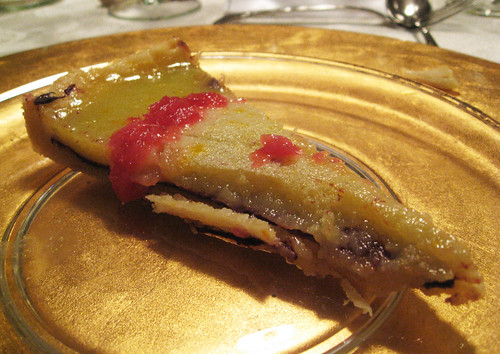
Before diving in, I did a little bit of research and one thing I found out right away is that most Cambodians prefer to call themselves Khmer, which means "hill." They also call their country Kampuchea or Srok Khmer. Another interesting tidbit is that Khmer people are descended from a mix of ethnic groups, and at one time was a Hindu-based culture. So when looking at a menu, especially at restaurants where Cambodian isn't the main cuisine, look for the word "Khmer" to help you identify Cambodian dishes.
Cambodian Cuisine has Indian, Chinese, Thai and Vietnamese influences. The Indian influence comes in the form of being taught the the art of blending a spice paste using many ingredients like cardamon, cloves, star anise along with native ingredients like lemongrass, garlic, shallots and more. This spice paste is referred to as ""kroeung", which is commonly used in Cambodian cooking. The many variations of rice noodles, stir-frying as a cooking method and also the use of similar Chinese vegetables in their dishes signify the Chinese influence. Just as in Thailand, fermented fish paste or prahok adds a unique flavor to Cambodian cooking while spring rolls made from rice paper stuffed wiith fresh vegetables and herbs and Banh Chiao, a Khmer version of the Vietnamese crepe, shows how Vietnam left its mark.
The most commonly eaten meat is actually fish and in fact, a popular Khmer dish called amok uses a kind of catfish steamed in a coconut based curry. Beef and chicken are usually stewed, grilled or stir-fried. Seafood favorites include clams, cockles and crayfish while more exotic delicacies include everything from frog, turtle and even tarantulas.
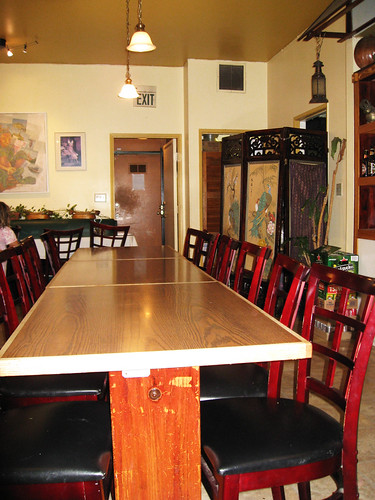
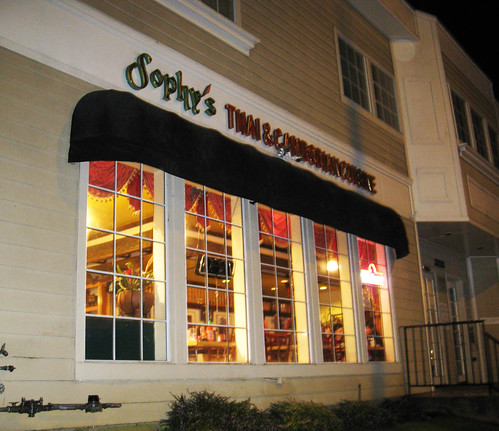 So now geared with some info, it was time to start my journey. First stop was at Sophy's Thai and Cambodian Restaurant. One thing to mention is that all the "Cambodian" restaurants I visited featured other Asian cuisines, primarily Thai. I'm not sure about the Thai-Cambodian connection, but if anyone has that insight, I'd love for you to comment on it. As for Sophy's, I went with a friend and since there was only two of us, we kept it to 3 Khmer dishes. Of the 3 dishes we tried, I only really liked one of them and only because it was the best of the so-so.
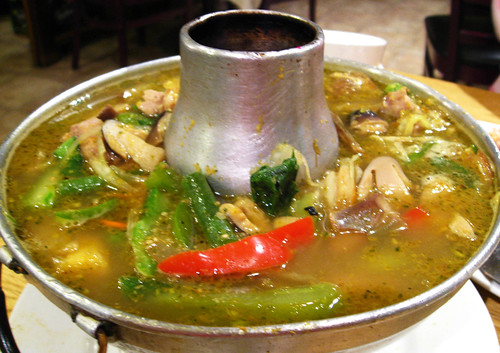
 The first to arrive was the Somlaw Kaykoh, a soup with an assortment of veggies, roasted rice and pork ribs. If you didn't know already, reading my blog, I have a pet peeve about veggies. They should not be cooked to a mushy submission and the veggies in this soup definitely lacked any kind of crispness. The soup itself was bland. You would think that the pork would add flavor, but all it really added was an oiliness to the broth that wasn't very appealing.
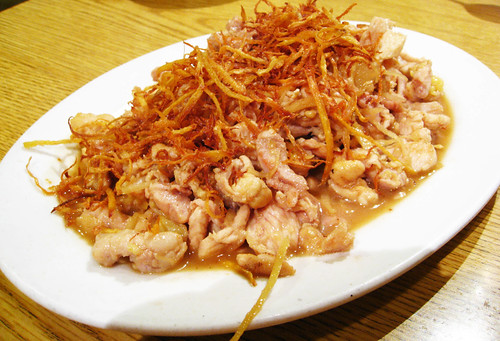
 Khmer Ginger Deluxe came next and it was comprised of chicken stir-fried in garlic soybean sauce and black pepper and topped with golden crispy ginger. The strong flavors of the ginger were quite evident, but that was about it. I didn't taste any garlic or black pepper at all in this dish. Right now, I'm batting zero.
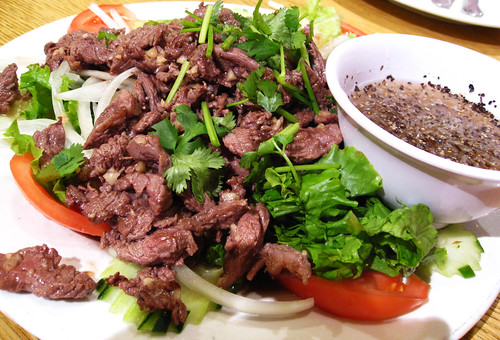
 The saving grace of this meal was the Beef Lok Lak with thinly sliced tomato, cucumber, onion and lettuce topped with stir-fried beef flank and served with a lime-black pepper dressing. It reminded me of a Thai Beef Salad. Once dressing was poured over everything and mixed it all up, I was loving it. I loved the tart and peppery flavors of the dressing. The meat was also tender which I definitely appreciated.
 Based on just 3 dishes, I don't think it would be fair to pan the food at Sophy's. At least, I enjoyed 1/3 of my meal, but I was left with an overall feeling that I could take it or leave it. For now, I was ready to check out another restaurant.
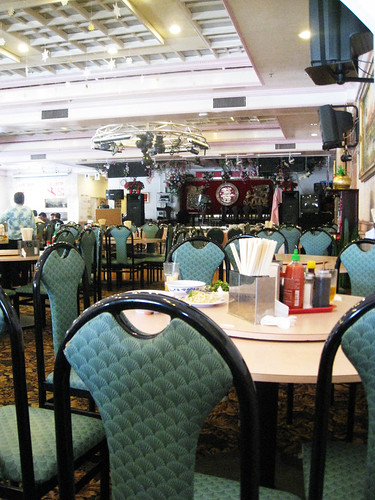
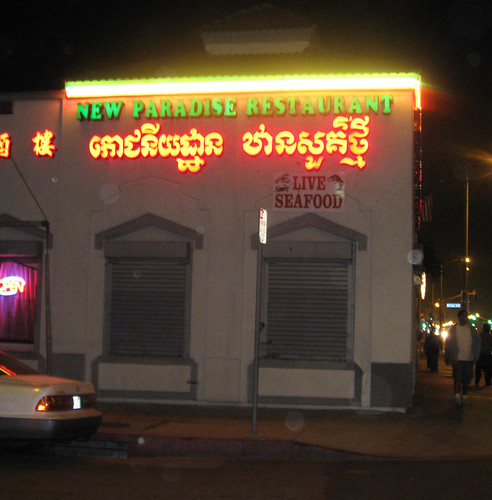 Next up was a visit to New Paradise. The same friend who accompanied me to Sophy's came with me to this second Cambodian restaurant as well. New Paradise had a different ambiance from Sophy's. It's used a lot for large parties because in the middle was a large dance floor and a stage. In fact, during our meal there, a band with a singer was performing while some customers were doing their groove thing on the dance floor. Like before, we only ordered 3 dishes.
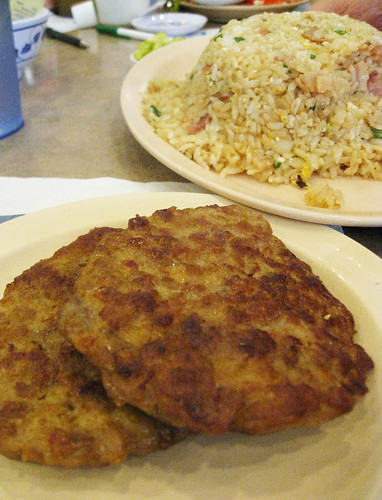
 First to arrive was the Steamed Ground Pork, Salty Fish and Egg with Fresh Vegetables. The pork, fish and egg mixture reminded me of a soft moist meatloaf. I'm actually not sure how I completely feel about this dish. On the one hand, the texture wasn't that appealing, but I liked the salty, meaty, slightly fishy flavors. Also, the raw veggies surprised me. Usually, when raw veggies are served, they're used as some kind of wrap or holder (e.g. lettuce to wrap Korean bbq in or lettue cups), come with a dip or are part of a salad. These were just sliced or chopped and except for the cucumber had a slight bitter bite to them. In a way, the contrast between crispy bitterness and soft saltiness wasn't too bad. It was interesting to try this dish, but I wouldn't necessarily order it again.
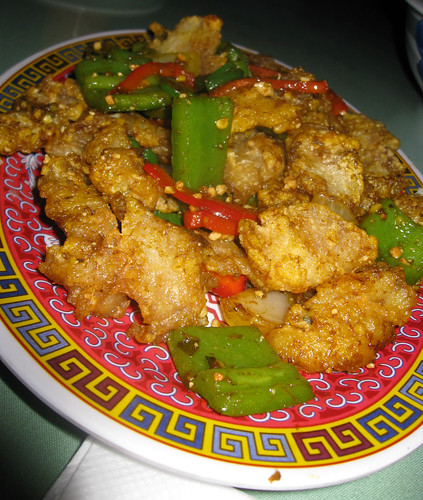
 Next was the Fish Filet with Lemongrass. It's hard to go wrong with almost any type of fried fish and this dish was no exception. I think the lemongrass must have been finely chopped and added to the batter the fish was fried in. There was a definitely lemony-herby taste to the fish which I liked and I appreciated how the batter wasn't overly done.
 Again, the last dish was the star of the show and that was the Grilled Beef Sirloin with Anchovy-Sauced Veggies. The beef was tender and juicy and I totally fell in love with that anchovy sauce. It was very similar in taste to Filipino anchovy sauce. I think there was also a squeeze of lemon or lime in that sauce, because there was also a tartness that went well with its saltiness. I could have just eaten that one dish and would have been more than satisfied.
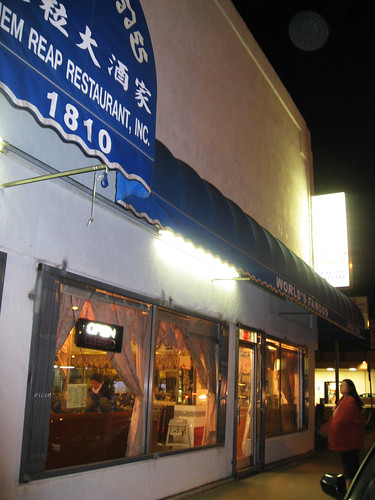
 Based on a 3 dish comparison between Sophy's and New Paradise, New Paradise was a clear winner, but for my next Cambodian dining experience, I wanted to try more dishes. My next stop was at Siem Reap and this time I had this dinner with members of my dining group. When I did some reading about the Cambodian restaurants in Little Cambodia, the general consensus was that Siem Reap was the best for this type of cuisine, so I was really looking forward to checking out the food there. For this third outing, we sampled 5 dishes.
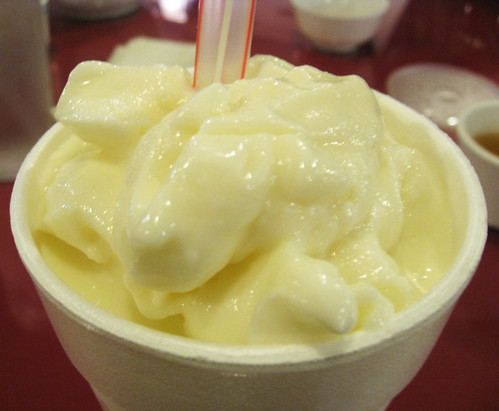
 Being a durian lover, once I saw a durian shake on the menu, I had to have it. It was wonderfully thick, creamy and had the pungent flavor of the durian that I have come to love.
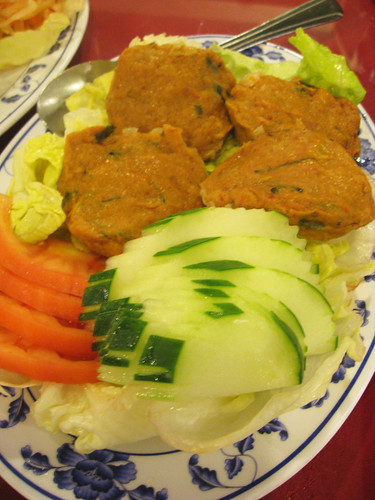
 As I was enjoying my durian shake, the first dish to come out was the Cambodian Style Fish Pancake. As with other dishes I've tried previously, this came with sliced fresh veggies which in this case were tomatoes and cucumber on a bed of lettuce. In truth, these pancakes weren't that memorable. I know that I didn't dislike them, but I wouldn't say that I was wowed by them either.
 Next up was the Beef Jerky with Sweet Papaya Salad. The beef was without a doubt jerky, because it was certainly chewy, but I liked it. I'm not sure what marinade was used, but the meat had a good flavor and that sweet papaya salad was actually quite addicting.
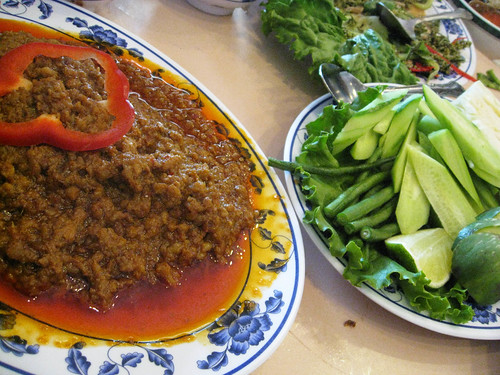
Following the beef jerky came the Cambodian Ground Pork with Curry Sauce and with it, came another big plate of fresh vegetables. The ground pork was a little oily and also felt heavy. I'm not sure if the "heavy" description makes sense or not, but it still tasted good. I honestly wasn't sure what to do with the fresh vegetables so I ended up spooning the ground pork on rice, adding some of the veggies and mixing it all together. The rice and the veggies actually cut down the oiliness a bit.
 The Cambodian Hot & Sour Fish with Baby Shrimp Soup came next, although I had expected it to come first. Regardless of its arrival time, it was a very good soup. It reminded me of Sinigang, which is a Filipino sour soup. They were quite generous with their catfish portions and I enjoyed the hits of salt that the dried baby shrimp added to the sourness of the soup.
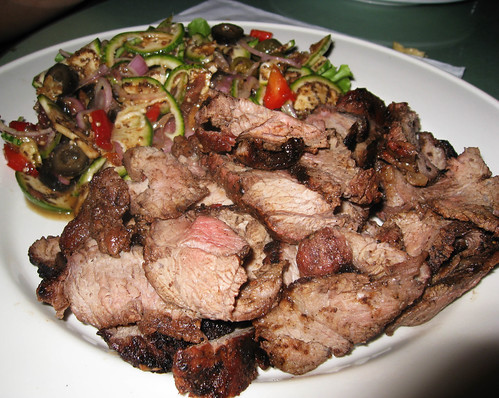
 Last on the menu was the Cambodian French Style Tender Beef with Anchovy Salad. What's interesting is that this is my third time having this dish and it always ends up being my favorite one of the evening. Three different restaurants and done slightly differently each time, but the meat is always tender and the anchovy sauce in all its pungent glory always puts a smile on my face.
 So by now, I've been to 3 different Cambodian restaurants in Little Cambodia in the city of Long Beach. Each one was progressively better than its predecessor, but could I say emphatically that I was in love with Cambodian cuisine? Well, the answer is no. I didn't dislike it, but in my list of favorite Asian cuisines, it would be my last pick. It's hard for me to pinpoint what it was about Cambodian food that didn't attract me.
The best I can say is that it was lacking in bright, fresh flavors. At varying times, the food had no zing to it, was oily or just seemed "dark" in taste. I also missed my veggies. There weren't many cooked vegetable options and the raw veggies that came out had a slight bitterness to them that wasn't always appealing. Out of the 11 dishes I tried, there were only two dishes I really liked without question. One was a repeat across all 3 restaurants and the other was a soup that drew me to it because it was similar to a Filipino soup I grew up with and loved.
Safe to say, at that point, I was pretty much done with my Cambodian food explorations. While I wouldn't turn down an invitation to dine at a Cambodian restaurant, I had no plans to re-visit this particular type of food anytime soon. But...I bet you knew that was coming, huh? I heard about a Cambodian restaurant that was actually closer to me than the ones in Long Beach so I decided that one more try was in order.
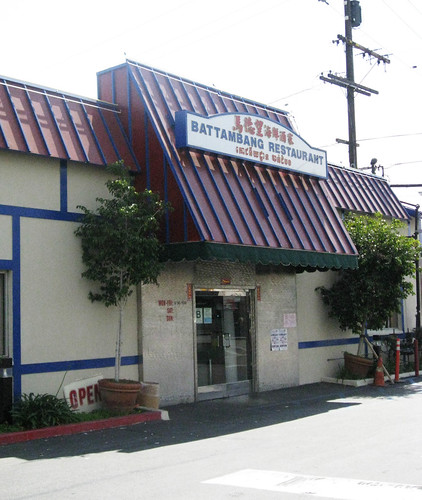 Battambang was the name of restaurant and it was in the city of San Gabriel. What attracted me to it was an article I read about it written by Jonathan Gold. He made the food seem pretty enticing, so armed with that article, I went with a group of other foodie lovers for lunch. Our menu for that meal was based on Jonathan Gold's recommendations as well as suggestions from the restaurant manager along with requests from the other diners. Of the 11 dishes we had, 7 were Khmer, as far as I knew, and those are the 7 I'm going to be focusing on.
 The first of the 7 was the Chicken with Lemongrass, a dish I also had at New Paradise. Battambang's version was more saucy and had good caramelization from the chicken being sauteed with the vegetables. The batter for this chicken was a bit heavier than I would have liked, but it was still a good dish - not better than the one at New Paradise, just different.
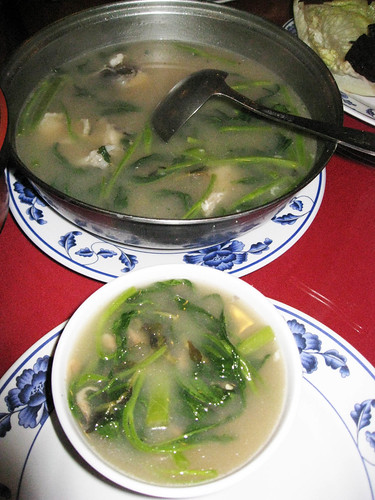
 I totally gave a thumbs up to the Hot and Sour Banana Blossom with Fish Soup which came next to the table. The banana blossom added a different texture, both crunchy and soft and the soup had generous portions of fish with a tangy, sour broth that made my Filipino palate quite happy.
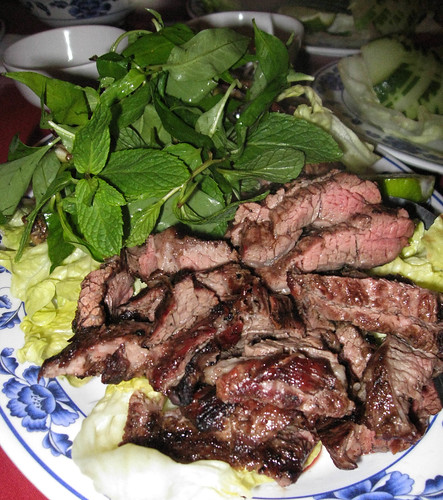
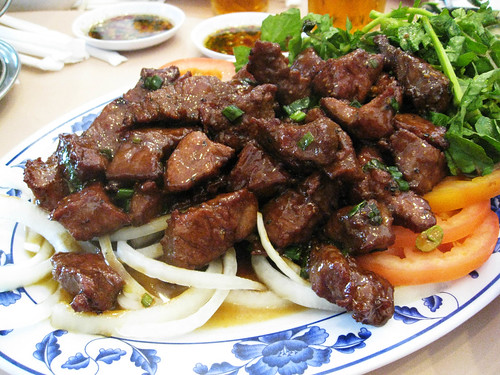
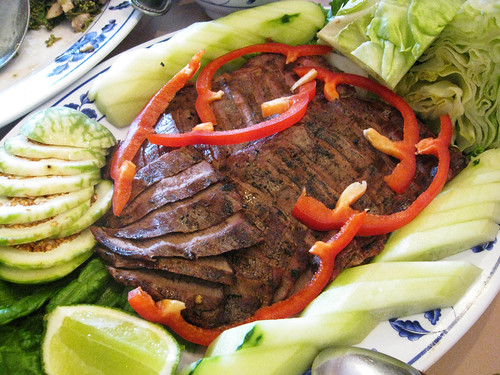
 Fourth time's the charm for the Beef Lok Lak, which apparently is a dish that is also made with venison, but wasn't available that afternoon. I have to mention that at only one of the Long Beach Cambodian restaurants, this dish was also referred to as the Beef Lok Lak, which came without an anchovy salad while the other two dishes were referred to as either a Grilled Beef Sirloin or Cambodian French Style Beef, but both came with an anchovy salad. Can someone let me know if these are actually two different dishes or just variations of one dish? I'm a little unclear. As for the Beef Lok Lak at Battambang, it was tender, juicy and had a delicious marinade.
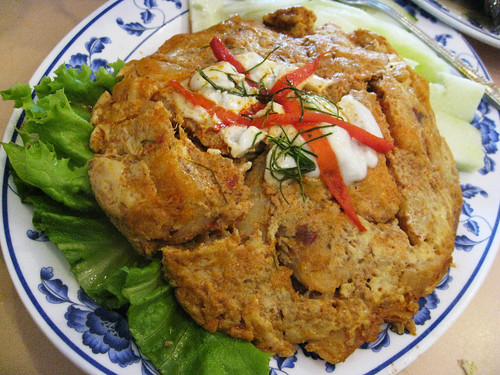
 A couple of dishes after the Beef Lok Lak, the Steamed Fish Fillet with Coconut Milk or Amok arrived at the table. The steamed fish had a soft texture and it mixed well with rice. I think the coconut milk was a wonderful compliment to the steamed fish and gave it a nice hit of sweetness that wasn't overwhelming.
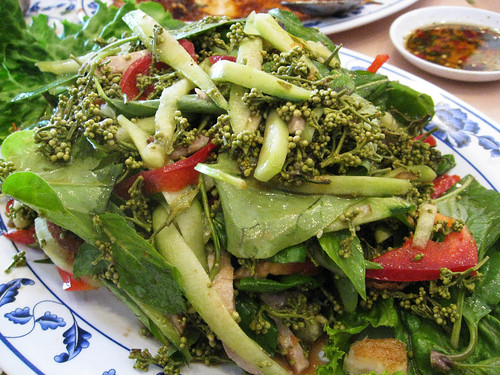
 The Sadao with Fish was the least liked of everything we ate. There wasn't any issue with the fish which was nice and delicate, but the sadao, which was was an herb was very bitter and medicinal tasting. I'm used to bittermelon which can be quite strong on its own, but this sadao was much more powerful. In short, everyone ate around the sadao.
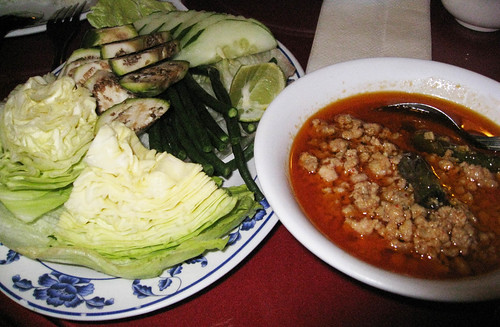
 Second to the last Cambodian dish was the Cambodian Style BBQ Beef. The meat itself was a little dry, but had peppery notes from the marinade that was appealing. It came with raw cut veggies along with half a head of cabbage. I read somewhere and I can't remember where, but eating this dish was similar to Korean BBQ where the you'd wrap the meat in the large cabbage (instead of lettuce) leaves and eat it that way. It was tasty this way, especially if you poured a little chili sauce or fish sauce on the beef before wrapping it up and devouring.
 The final dish of the meal was the Curry Fish, which is a deceiving, since it's actually made up of ground pork and fish. Although it was a little greasy, I really enjoyed its sweet with heat flavors. From Jonathan Gold's article, it was mentioned that you use the fresh vegetables to dip into this "Curry Fish" dish like chips and dip, which actually makes sense. I actually forgot about that part of the article and ended up spooning it on my rice and forgetting about the vegetables altogether.
 Of the all the Cambodian restaurants I visited, Battambang was definitely my favorite. The bright flavors that I found lacking elsewhere were really very much evident at this restaurant and its Cambodian dishes. Where before I wasn't very impressed, Battambang really switched it around for me, but there is something I do want to touch upon again.
Earlier, I had mentioned how the menus of all the Cambodian restaurants I visited usually included other Asian dishes like Thai, Chinese or Vietnamese. It was if Cambodian food itself couldn't be the only player. I don't know whether it's because there aren't enough Cambodians who came over bringing their country's recipes and food culture or there's just a lack of Cambodian ingredients that doesn't allow for a more expansive Cambodian only restaurant. I don't have the answer. However, in each of the 4 Cambodian restaurants I visited, I always actively searched out the Khmer dishes, which is something you'll have to do as well if you decide to visit any of the restaurants above.
Expanding on these thoughts, a conversation with fellow blogger, Wandering Chopsticks started my wheels churning.. As I mentioned, I really enjoyed the food at Battambang, but after reading about WC's visit to Battambang and her mentioning that the majority of the dishes were really Vietnamese cooked by Chinese-Cambodians with only a small pocket of Cambodian dishes, it got me thinking. Did I enjoy the "Cambodian dishes" more at Battambang because they were actually Cambodian dishes cooked in a Vietnamese or Chinese way, so not really Cambodian at all? Compared to the Cambodian dishes I had at Little Cambodia and Battambang, the cooking styles seemed a little different, but heck, I'm just not sure.
I've been working on this blog entry off and on for 12 days just because I'm just so confused now about what's authentic or as close to Cambodian cooking as possible or what's not or maybe, the nuances are just too subtle for me to grasp between Cambodian food and other South East Asian Cuisines.
In the end, all I can really say is that there were hits and misses at each of the 4 restaurants I visited. When it's all said and done, even though I enjoyed the "Cambodian" food the most at Battambang, Cambodian cuisine is still on the bottom of my preference list when it comes to Asian dining. At least, I can say that I definitely gave it more than a fair chance.
Sophy's Thai and Cambodian Cuisine
3240 E Pacific Coast Hwy
Long Beach, CA 90804
(562) 494-1763
To see pics, go to:
http://www.flickr.com/photos/la_addict/sets/72157610225221556/
New Paradise Restaurant
1350 E Anaheim St
Long Beach, CA 90813
(562) 218-0066
To see pics, go to:
http://www.flickr.com/photos/la_addict/sets/72157610287084022/
Siem Reap
1810 E Anaheim St
Long Beach, CA 90813
(562) 591-7414
To see pics, go to:
http://www.flickr.com/photos/la_addict/sets/72157612095760906/
Battambang Seafood Restaurant
1806 S San Gabriel Blvd
San Gabriel, CA 91776
(626) 307-3938
To see pics, go to:
http://www.flickr.com/photos/la_addict/sets/72157613632747964/detail/